


Landmark History | Taj Mahal — The 1648 Mausoleum Completion on the Yamuna
Taj Mahal, Global, Earth · 1648
Unreviewed contributionBy kevin · · updated · Report an issue





























Distribute Bounty
This will distribute the bounty equally among all qualifying memories. This action cannot be undone.
Cancel Bounty
Are you sure you want to cancel this bounty? The remaining amount will be refunded to your account.
Success!
Operation completed successfully.
Error
Something went wrong.
Landmark History | Taj Mahal — The 1648 Mausoleum Completion on the Yamuna
kevin
In 1648, at the north end of a terraced garden on the right bank of the Yamuna, the principal mausoleum of the Taj Mahal reached the completion date recorded by Indian heritage authorities and UNESCO, fixing a distinct milestone within a complex that was still being built.
Mughal emperor Shah Jahan had commissioned the funerary complex after Mumtaz Mahal died in 1631, and the Archaeological Survey of India records that the riverfront land, then held by the Kachhwahas of Ajmer, was acquired in exchange for four havelis before construction began around 1631–1632.
By 1648, masons, stone-cutters, inlayers, carvers, painters, calligraphers, dome builders, and other artisans recruited across the Mughal empire, Central Asia, and Iran had formed a brick-and-lime-mortar tomb faced in white Makrana marble, while red sandstone distinguished other parts of the ensemble; the official history describes a board of architects, and UNESCO identifies Ustad Ahmad Lahori as the principal architect rather than the sole maker.
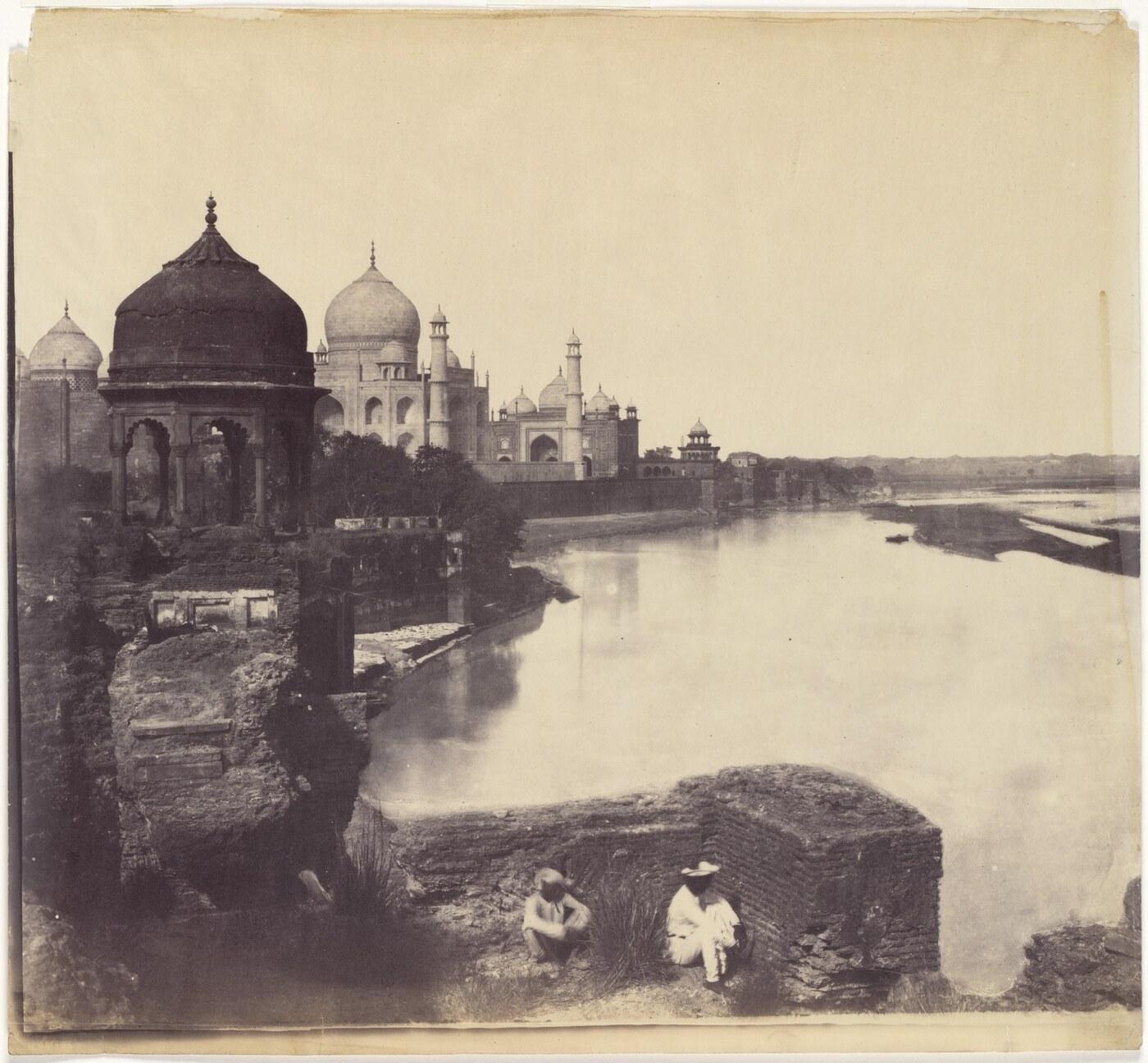
The physical arrangement turned the riverbank into part of the monument’s logic: the tomb stands at the garden’s northern edge instead of its center, raised above the Yamuna on a square platform with four detached minarets, while the long south–north approach organizes gate, garden, water channels, and mausoleum along one axis.
The year 1648 does not mark completion of everything now called the Taj Mahal, because the mosque, guest house, main gateway, outer courtyard, cloisters, and gardens continued toward a separately documented 1653 completion, and the site’s 1983 World Heritage inscription was a much later act of recognition rather than its origin.
The Archaeological Survey of India still manages the protected complex, where conservation and monitoring continue; its current notice lists sunrise-to-sunset access, Friday closure except for limited mosque prayer access, restrictions on prohibited objects including drones, and controlled night viewing, so the surviving tomb can be observed only under the site’s operating and conservation rules.
John Murray’s 1858–62 photograph shows the completed mausoleum and its riverfront setting nearly two centuries after the 1648 construction milestone; it is used here as a later historical record, not as an image of the building process.
Photo: John Murray, 1858–62, CC0 1.0, via The Metropolitan Museum of Art and Wikimedia Commons.

changes?
delete this memory?
We detected that you have a Blox in your crypto wallet! We will import the Blox into your account.
Click on done below to complete the import.
Welcome Back!
Sign in to preserve cherished moments
Don't have an account?
Welcome!!
Sign up and start preserving cherished moments
?
?




Choose your payment method
Buy with Metablox Credit
Do you want to mint Blox with Metablox Credit?
Which Crypto would you like to use?
Purchase Confirmed!
Your Blox is being minted on-chain and will appear in your profile shortly.
Log in or sign up to claim your Blox.
How many credits do you want to buy?
$100 USD = 1 Metablox Credit = 1 Blox.
Use Metablox Credit to mint any Blox you want on the map.
 expand_more