


Dynastic History | Angkor Wat — The Repair Bill Cut Into the Wall in 1701
Angkor Wat, Global, Earth · 1701
Personal memoryBy kevin · · Report an issue





















Distribute Bounty
This will distribute the bounty equally among all qualifying memories. This action cannot be undone.
Cancel Bounty
Are you sure you want to cancel this bounty? The remaining amount will be refunded to your account.
Success!
Operation completed successfully.
Error
Something went wrong.
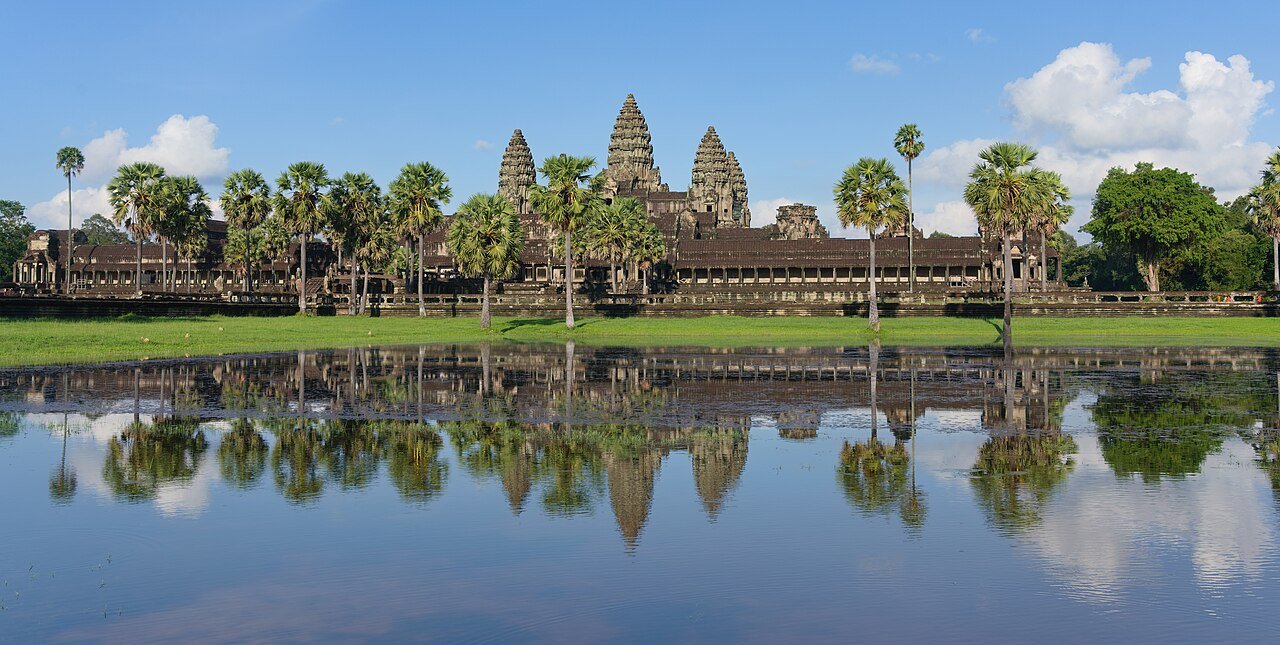
Dynastic History | Angkor Wat — The Repair Bill Cut Into the Wall in 1701
kevin
In 1701 a court official named Oknha Jaiya Nan had a poem in Middle Khmer cut into the east wall of Angkor Wat, between the bas-relief galleries. It is the longest Khmer inscription at the temple, and it is not a royal document. It records what he paid for: images of the Buddha there had been left broken into pieces, heads on the ground and arms pulled out, and he commissioned their repair, dedicating the merit to his wife and to two sons killed in fighting. Saveros Pou published the text, catalogued as IMA 38, in the Bulletin de l'École française d'Extrême-Orient in 1975.
The temple was raised as a Vishnu foundation for Suryavarman II in the first half of the twelfth century. From the late thirteenth it was used for Theravada worship, and the wall inscriptions surviving from the sixteenth and seventeenth centuries are mostly the records of monks and donors rather than of a chancery. IMA 27, dated 1661, has a monk arriving to pay homage at "Preah Angkor Wat". Japanese pilgrims of the seventeenth century left inscriptions of their own.
This is worth stating because of what is usually said instead. Angkor Wat was not lost and it was not found. Excavation inside the enclosure, published by Miriam Stark, Piphal Heng and Alison Carter in PNAS in 2019, found the temple grounds still occupied after the fifteenth century, once the court's attention and the trade had shifted south.
The temple stands inside the Angkor Archaeological Park, administered since 1995 by the APSARA National Authority. UNESCO's file for the property describes it as living heritage: people who live in the park hold ceremonies at these temples still.
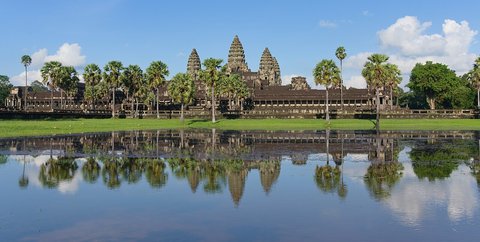
📸 Cover: Angkor Wat from the west across the reflecting pool, Satdeep Gill, CC BY-SA 4.0 via Wikimedia Commons
changes?
delete this memory?
We detected that you have a Blox in your crypto wallet! We will import the Blox into your account.
Click on done below to complete the import.
Welcome Back!
Sign in to preserve cherished moments
Don't have an account?
Welcome!!
Sign up and start preserving cherished moments
?
?
Choose your payment method
Buy with Metablox Credit
Do you want to mint Blox with Metablox Credit?
Which Crypto would you like to use?
Purchase Confirmed!
Your Blox is being minted on-chain and will appear in your profile shortly.
Log in or sign up to claim your Blox.
How many credits do you want to buy?
$100 USD = 1 Metablox Credit = 1 Blox.
Use Metablox Credit to mint any Blox you want on the map.
 expand_more