


Dynastic History | Cathedral of Saint Domnius — Walnut Doors on an Emperor's Tomb
· 1214
Personal memoryBy kevin · · Report an issue



































Find memories left by people near you.
Distribute Bounty
This will distribute the bounty equally among all qualifying memories. This action cannot be undone.
Cancel Bounty
Are you sure you want to cancel this bounty? The remaining amount will be refunded to your account.
Success!
Operation completed successfully.
Error
Something went wrong.
Dynastic History | Cathedral of Saint Domnius — Walnut Doors on an Emperor's Tomb
kevin
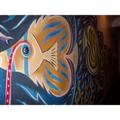
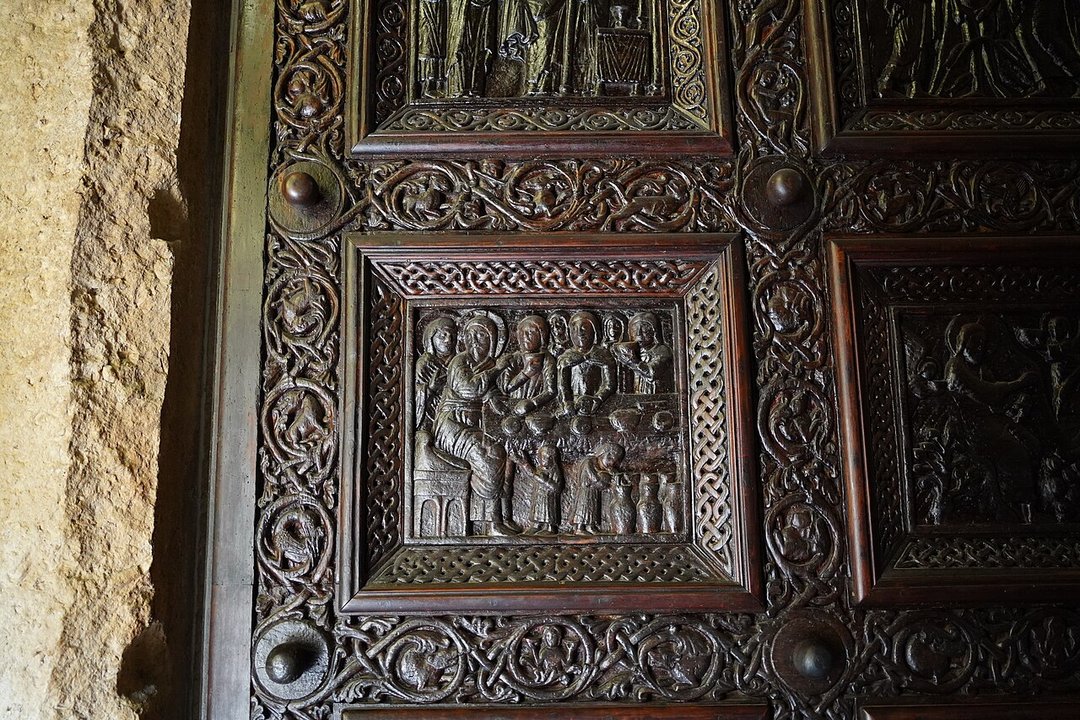
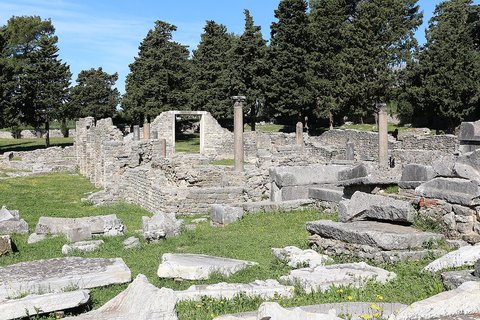
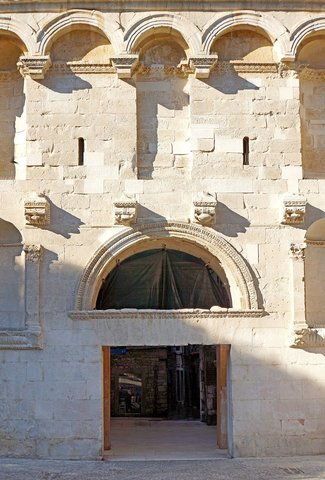
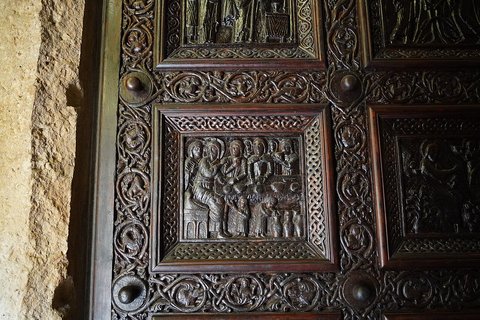
In 1214 a Split woodcarver, Andrija Buvina, finished a pair of doors for the city's cathedral: two walnut wings on oak boards, fourteen carved panels to a wing, scenes from the life of Christ running through both in a single programme. The building he hung them on had been made as a tomb. Diocletian's mausoleum stands on the east side of the palace's colonnaded court, octagonal outside and circular within, ringed by eight columns of red granite under a brick dome. The sarcophagus at its centre was destroyed when the building was turned into a church.
When that happened is not agreed. The Croatian Academy's heritage account puts the transformation into a Christian cathedral in the seventh century; the Croatian Conservation Institute's manual on the palace puts the conversion of the mausoleum into an improvised church in the tenth. The story attached to the earlier date, in which refugees from Salona bring in the relics of Domnius and Anastasius, martyrs condemned under Diocletian's own edicts, in the time of a first archbishop called John of Ravenna, comes from Thomas the Archdeacon, writing in Split in the thirteenth century about events six hundred years before him.
The later record is firmer. Bonino da Milano built the canopy over the altar of Domnius in 1427; Dujam Vušković painted the evangelists in 1429; Juraj Dalmatinac carved the altar of Anastasius in 1448; a main altar went up between 1685 and 1689, and the relics of Domnius were moved to a new altar in 1770. The church is in daily use as the seat of the Archdiocese of Split-Makarska, and it is the reason the mausoleum stands at all: the emperor's tomb survived because it was given a second job. Buvina's doors are still at the entrance, and the bell tower beside them is climbed on a ticket.
📸 Cover: detail of Andrija Buvina's walnut doors of 1214 at the cathedral entrance, TimeTravelRome, CC BY 2.0 via Wikimedia Commons
changes?
delete this memory?
We detected that you have a Blox in your crypto wallet! We will import the Blox into your account.
Click on done below to complete the import.
Welcome Back!
Sign in to preserve cherished moments
Don't have an account?
Welcome!!
Sign up and start preserving cherished moments
?
?
Choose your payment method
Buy with Metablox Credit
Do you want to mint Blox with Metablox Credit?
Which Crypto would you like to use?
Purchase Confirmed!
Your Blox is being minted on-chain and will appear in your profile shortly.
Log in or sign up to claim your Blox.
How many credits do you want to buy?
$100 USD = 1 Metablox Credit = 1 Blox.
Use Metablox Credit to mint any Blox you want on the map.
 expand_more