


Tennis History | Worple Road, Wimbledon — A Championship Called to Revive a Drooping Exchequer
· 1877-7
Personal memoryBy kevin · · Report an issue















































Find memories left by people near you.
Distribute Bounty
This will distribute the bounty equally among all qualifying memories. This action cannot be undone.
Cancel Bounty
Are you sure you want to cancel this bounty? The remaining amount will be refunded to your account.
Success!
Operation completed successfully.
Error
Something went wrong.

Tennis History | Worple Road, Wimbledon — A Championship Called to Revive a Drooping Exchequer
kevin
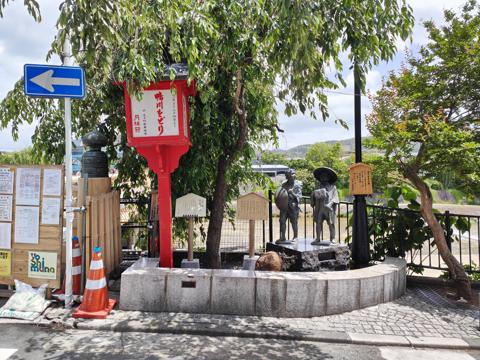
The cover of this entry is a photograph taken from the public road on 31 August 2026. It shows a pair of ornate iron gates on Nursery Road, the ground beyond them, floodlights, an artificial pitch, and an interpretation board on a pavilion wall. Nothing in it is old. It is here because this is the piece of ground on which the first lawn tennis championship meeting was played in July 1877, and because the reason that meeting was called is not the reason usually given.
**What this entry argues.**
The Championships were not founded to crown a champion. They were founded to raise money, because croquet had stopped paying for itself. That is not a modern debunking. It is what two of the men who were there wrote down, separately, in the same book, thirteen years afterwards.
**The two witnesses, and why they count as near-primary.**
The Badminton Library volume *Tennis; Lawn Tennis; Rackets; Fives* was published by Longmans, Green in 1890. Two of its contributors were inside the events it describes.
Chapter XIV, at printed pages 279 to 293, is by **Spencer W. Gore** — the man who won the 1877 championship. The lawn tennis narrative chapters are by **C. G. Heathcote**, who was one of the three men named to the sub-committee that settled the rules for that meeting. Neither is a historian looking back at a founding. Each is a participant writing about a thing he took part in, and on this particular point they agree without appearing to consult one another.
**Gore, at printed pages 280 to 281**, read off the page images and not off the text layer:
> "Soon after this it became apparent to the committee of the All England Croquet Club that their game had ceased to be self-supporting; and to some few of its members who had occasionally been allowed, on sufferance, to play lawn tennis on the sacred croquet-grounds, it occurred that the new game promised to be good and popular, and that a Championship Lawn Tennis Meeting on the All England Croquet-ground might revive the drooping exchequer of the club."
Three things are packed into that sentence and all three are worth separating out. The club's own game had ceased to be self-supporting. Lawn tennis was being played on the croquet lawns *on sufferance* — tolerated, by a few members, on ground that Gore calls sacred and means ironically. And the championship was proposed as a remedy for the accounts.
**Heathcote, at printed page 145**, opening his third chapter, arrives at the same place independently and adds the coins:
> "The first lawn-tennis championship match was over: the shouts which greeted the victor had subsided: the secretary had noted with satisfaction the facility with which his club might recruit an exhausted exchequer with the shillings and half-crowns of a public eager for novelty..."
Two participants, one volume, two separate chapters, the same word — exchequer — and the same mechanism. The club needed gate money and the new game could produce it.
**The prize and the promoter came from the same address.**
At printed page 141 Heathcote records that **J. H. Walsh, the editor of *The Field*, was at that time honorary secretary of the All England Croquet Club**, and that he induced the proprietors of the paper to offer **a silver challenge cup of twenty-five guineas**. Early in 1877 the committee renamed itself the **All England Croquet and Lawn-Tennis Club**, and a few weeks later it announced the July meeting.
That is worth stating plainly rather than leaving as a coincidence of names. The newspaper that put up the trophy was edited by the man who was running the club that staged the tournament. The sporting press was not covering the event from outside; it was one of the parties that made it happen, and it stood to gain from a new game its own columns would report. This is an ordinary Victorian arrangement and it was not hidden — Heathcote prints it as a matter of course. It is only surprising to a reader who has been told the Championships began as a pure sporting impulse.
**What the money bought.**
Twenty-two men entered. Gore won. The gate is what the club was after and, on Heathcote's telling above, the secretary got it. The second meeting in July 1878 drew thirty-four competitors, which is the number Heathcote gives at printed page 146 and which is the only circulation figure this entry has for the idea's success.
**The amateur rule, stated once.**
Everything above sits entirely inside the period when this meeting, and every meeting named in it, was closed by rule to anyone who had ever been paid to play. No figure or record in this entry is set against anything after 1968, when that rule ended at the four majors, and no comparison across that boundary is made or implied. A title count that runs through 1968 without saying so is making an argument rather than reporting a number, and none is made here.
The phrase Grand Slam appears nowhere else in this entry and is disambiguated here once, because readers arrive carrying it. It has two ordinary senses — the four major tournaments taken as a set, and all four won inside a single calendar year. The meeting of July 1877 was neither, because in July 1877 there was nothing else for it to be one of.
**Naming discipline.**
The event is **The Championships, Wimbledon**. It is never the Wimbledon Open; that event has no Open in its name and never has had. In 1877 it was not called either: the club announced a championship meeting, and the club had been renamed the All England Croquet and Lawn-Tennis Club only weeks before.
**A dispute this entry does not settle.**
The plaque standing on the gate pier in the cover photograph dates the club's occupation of this ground from **1869**. A community mapping record for Nursery Road says the All England Croquet Club was started **in 1868** here. The likely reconciliation is that the club was founded in one year and took this ground in the next, but nothing read for this entry establishes that, and neither year is printed here as settled.
It is worth recording what was searched, because the negative is a finding. The full text of the 1890 Badminton Library volume was searched this session for a founding year of the club — for 1868, 1869, and for founded, instituted, established, formed and started, together with every page the index gives under the club's own name. **The volume never dates its own club's founding.** Two participants, writing in 1890 about a club they belonged to, do not say when it began. The route to settling it is *The Field* for 1868 to 1870, or the club's minute books, and neither was available here.
**An attribution difference, named rather than resolved.**
Gore, at printed page 281, credits the two suggestions that made the court rectangular instead of hour-glass and moved the net-posts a yard outside the side-lines to **Julian Marshall**, and says that Marshall together with **Henry Jones**, who wrote as "Cavendish", carried out all the arrangements of the first Championship Meeting. Heathcote elsewhere names a sub-committee of **three** — Marshall, Jones and Heathcote himself. Both statements are recorded here and neither is corrected. A man may leave his own name out of a list; a man may also be forgotten from one. Nothing read here decides which happened.
**Status, dated.**
Read on 7 September 2026. The club left this ground in 1922 for Church Road. The plaque on the gate states that the site was purchased by Wimbledon High School and officially opened as its sports ground in 1935. What stood here for those thirteen years, and when the purchase actually happened, is not stated on the plaque and is not known to this entry — it is the most obviously answerable open question at this address, and the route to it is the Merton rate books, the school governors' minutes and the local press for 1922 to 1935.
The ground today is a school playing field with an artificial surface and floodlights, in private use, photographed from the road.
**Coordinate.** 51.41541, -0.21639, precision radius 140 m. The anchor is the ground on Nursery Road, off Worple Road, Wimbledon, in the London Borough of Merton.
The pin is the bounding-box centre of the recreation ground recorded in OpenStreetMap as way 738365035, an unnamed private recreation ground containing four tennis pitches and one multi-use pitch, whose northern edge abuts Nursery Road. Its extent is about 190 m north to south by 184 m east to west; the half-diagonal computed in session is 132.4 m, rounded up to the 140 m radius given here.
The identification rests on sources independent of that one. Historic England's Played in Britain collection gives the location of its photographs of this site as Wimbledon High School Playing Field, Worple Road, Wimbledon, Merton, and cross-lists them under the All England Croquet and Lawn Tennis Club, Worple Road. The school's own facilities page describes a Nursery Road site with an astroturf pitch, a playing field and a pavilion, which matches the content of the OpenStreetMap object and not merely its position. A sports-facilities directory derived from the Active Places dataset gives the ground an Ordnance Survey easting of 524147 and northing of 170088; the Office for National Statistics postcode centroid for SW19 4JA gives 524132 and 170092. Both, converted to WGS84 in session with a transform validated against the postcode product's own published latitude and longitude pairing to about 1.5 m, land on the northern edge of the mapped ground. The plaque on the gate names the club and the ground directly.
**The pin is the ground, not a court.** The modern boundary of the school sports ground is not demonstrated to be the boundary of the club's ground between 1877 and 1921, the courts have been relaid, and the surface is now hard and artificial. Where the original centre court stood inside this outline is not established here. The interpretation board visible in the cover photograph carries a site plan that appears to mark it, but the plan's labels are not legible at the resolution and angle available, and no bearing has been derived from it.
🚨 A warning for anyone extending this entry: every geocoder queried returns **51.4226, -0.2107** for this school. That is the Mansel Road main building, about 810 m from the ground, and it is not this site.
**Cover.** *Nursery Road, Wimbledon High School Playing Field*, photographed 31 August 2026 by **Amanda Slater**, CC BY-SA 4.0, via Wikimedia Commons; source Flickr, uploaded by Oxyman. 3888 × 2592 px. It is a 2026 photograph of the site as it is now, taken from the public road at the gate, not ground photography made under a ticket condition, and it depicts nothing of the 1877 meeting.
The interpretation board and the gate plaque visible in this frame carry the All England Lawn Tennis Club roundel as co-branding. This is disclosed rather than left for a reader to notice: the photograph is a third party's CC BY-SA image of on-site signage. No image originating with the All England Lawn Tennis Club, the United States Tennis Association, the Fédération Française de Tennis, Tennis Australia, the International Tennis Federation or the tours is used in this entry, in any form or at any age.
**Sourcing note.** The three passages inside quotation marks above were read off page images of the 1890 volume, not off its machine-read text layer, because that layer is corrupt inside these exact passages — it renders "been considerably" as "beeti sonsiderably" and "(Championship not instituted)" as "Prateek not instituted". Anyone quoting this book from its text layer will print a corrupted quotation. No second scan of this volume exists on the Internet Archive and a web search for the phrase "drooping exchequer" returns nothing, so cross-scan verification is impossible: the page image is the verification. The leaf-to-page offset in this scan is not constant, because unnumbered plates shift it; it runs about +31 early in the main text and about +27 by page 145. Do not compute a leaf number — check one and step from it.
**Sources.** *Tennis; Lawn Tennis; Rackets; Fives*, The Badminton Library of Sports and Pastimes, Longmans, Green and Co., 1890, for Spencer W. Gore's chapter at printed pages 279 to 293 and the exchequer passage at pages 280 to 281; for C. G. Heathcote's chapters, the shillings-and-half-crowns passage at page 145, the account of J. H. Walsh, the twenty-five-guinea cup and the club's renaming at page 141, and the 1878 entry at page 146. Internet Archive item india.history.resource.89303: https://archive.org/details/india.history.resource.89303 , with the page images used for the quotations at https://archive.org/download/india.history.resource.89303/page/n311_w1400.jpg and https://archive.org/download/india.history.resource.89303/page/n312_w1400.jpg (Gore, pages 280 to 281), https://archive.org/download/india.history.resource.89303/page/n172_w1400.jpg (Heathcote, page 145), https://archive.org/download/india.history.resource.89303/page/n168_w1400.jpg (page 141) and https://archive.org/download/india.history.resource.89303/page/n173_w1400.jpg (page 146). Historic England, Played in Britain collection, items PLA01/03/0743 and PLA01/03/0745, for the site's location and cross-listing: https://historicengland.org.uk/images-books/photos/item/PLA01/03/0745 . Wimbledon High School's own facilities page for the description of the Nursery Road site. OpenStreetMap data retrieved in session through https://api.openstreetmap.org/api/0.6/map for way 738365035 and its contents. Office for National Statistics postcode data served through https://api.postcodes.io/ . The plaque text was read off a full-resolution photograph of the object, not from an archive caption. All coordinate conversions and distances were computed in session.


changes?
delete this memory?
We detected that you have a Blox in your crypto wallet! We will import the Blox into your account.
Click on done below to complete the import.
Welcome Back!
Sign in to preserve cherished moments
Don't have an account?
Welcome!!
Sign up and start preserving cherished moments
?
?



Choose your payment method
Buy with Metablox Credit
Do you want to mint Blox with Metablox Credit?
Which Crypto would you like to use?
Purchase Confirmed!
Your Blox is being minted on-chain and will appear in your profile shortly.
Log in or sign up to claim your Blox.
How many credits do you want to buy?
$100 USD = 1 Metablox Credit = 1 Blox.
Use Metablox Credit to mint any Blox you want on the map.
 expand_more