
Computing History | Durand Building, Stanford — Public-Key Cryptography Entered Open Literature
· 1976-11
Personal memoryBy kevin · · Report an issue

















































Find memories left by people near you.
Distribute Bounty
This will distribute the bounty equally among all qualifying memories. This action cannot be undone.
Cancel Bounty
Are you sure you want to cancel this bounty? The remaining amount will be refunded to your account.
Success!
Operation completed successfully.
Error
Something went wrong.
Computing History | Durand Building, Stanford — Public-Key Cryptography Entered Open Literature
kevin
At Stanford’s William F. Durand Building, room 135 is documented as electrical-engineering professor Martin Hellman’s office by late 1977 or early 1978, soon after the research that opened a new chapter in civilian cryptography. The accessible record does not identify the exact desk or room where the 1976 manuscript was conceived, so this pin at 496 Lomita Mall is the documented public institutional anchor for Hellman’s Stanford lab, not a claimed publication venue.
In November 1976, Whitfield Diffie and Martin E. Hellman published “New Directions in Cryptography” in IEEE Transactions on Information Theory. The invited paper proposed public-key cryptosystems and digital signatures, and it described an exponential key-agreement method that let two parties establish a shared secret over an open channel without arranging that secret in advance.
Conceptually, each participant keeps a private value and publishes a mathematically derived value; combining the other participant’s public value with one’s own private value produces the same shared result on both sides. The security argument rests on the difficulty of reversing that public computation, turning key distribution from a courier problem into a mathematical one without implying that every later public-key system is the same construction.
The event should not be reduced to a lone-inventor story or an unqualified global “first.” Stanford’s historical account places Ralph Merkle alongside Diffie and Hellman in the public-key lineage, while the paper itself marks the moment the ideas and a workable key-agreement approach entered open technical literature under Diffie and Hellman’s names.
Stanford’s centennial history identifies Diffie as Hellman’s research assistant and collaborator, dates the publication to 1976, and describes the institutional pressure that followed as cryptography moved beyond government control. Steven Levy’s 1994 Wired profile independently traces the conceptual breakthrough to their Stanford collaboration and explains why separating public and private key material mattered for privacy, authentication, and electronic transactions.
The original paper is preserved at https://doi.org/10.1109/TIT.1976.1055638; Stanford’s institutional account is at https://engineering100.stanford.edu/stories/bridging-worlds-chips-code-and-cosmos; the independent retrospective is at https://www.wired.com/1994/11/diffie/; and Stanford’s official map record for Durand is at https://maps.stanford.edu/ada/building-ada.cfm?facil_id=04-540.
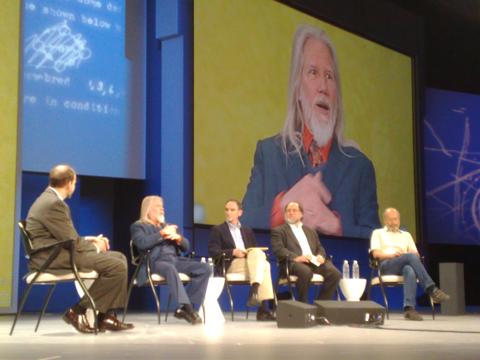
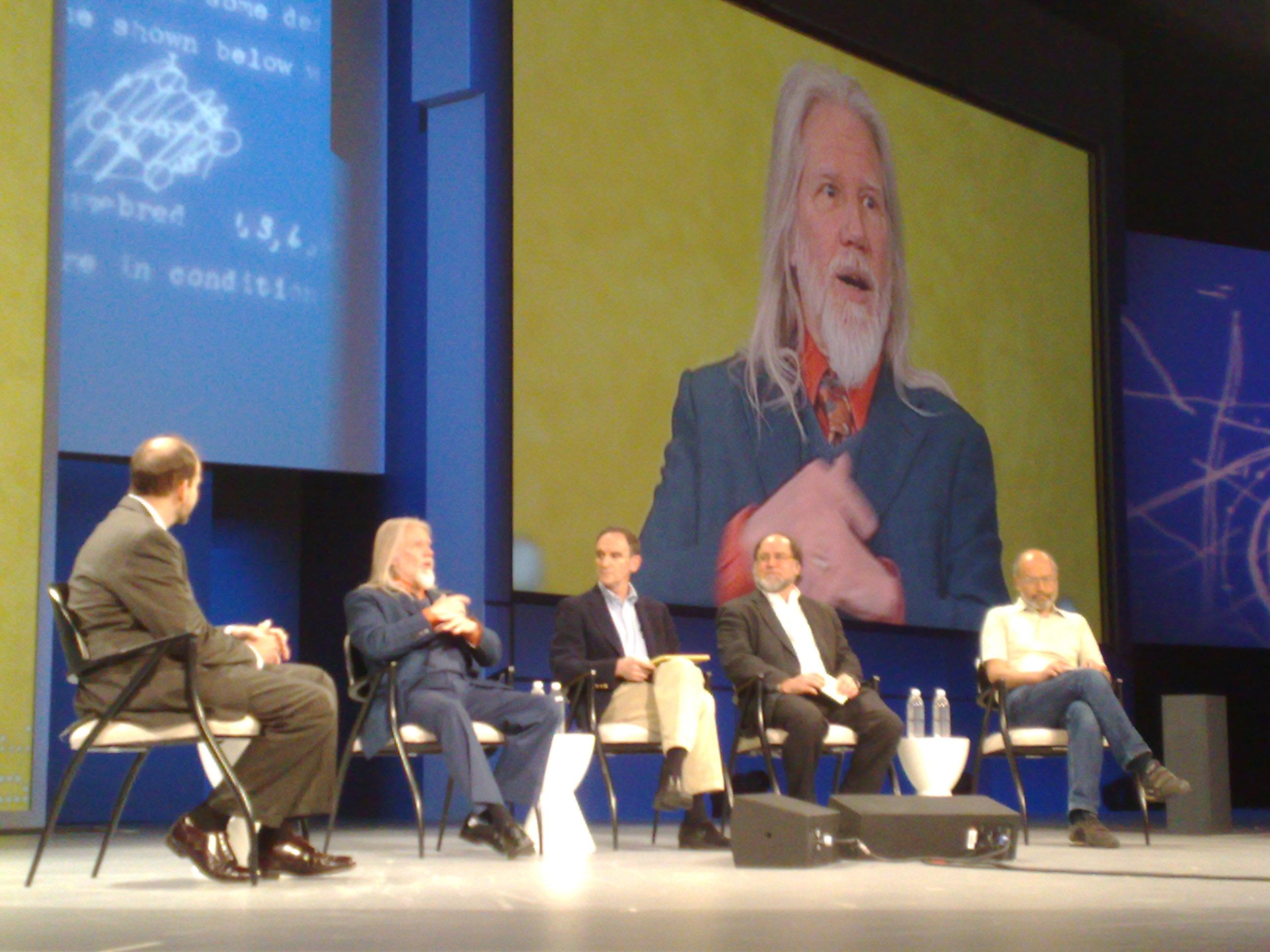
Photo: Dan Spisak, CC BY-SA 2.0, via Wikimedia Commons. The image shows Diffie and Hellman at the RSA 2008 Cryptographers Panel, not the 1976 research scene: https://commons.wikimedia.org/wiki/File:Cryptographers-2008.jpg.
changes?
delete this memory?
We detected that you have a Blox in your crypto wallet! We will import the Blox into your account.
Click on done below to complete the import.
Welcome Back!
Sign in to preserve cherished moments
Don't have an account?
Welcome!!
Sign up and start preserving cherished moments
?
?


Choose your payment method
Buy with Metablox Credit
Do you want to mint Blox with Metablox Credit?
Which Crypto would you like to use?
Purchase Confirmed!
Your Blox is being minted on-chain and will appear in your profile shortly.
Log in or sign up to claim your Blox.
How many credits do you want to buy?
$100 USD = 1 Metablox Credit = 1 Blox.
Use Metablox Credit to mint any Blox you want on the map.
 expand_more