


Dynastic History|Vank Cathedral, New Julfa — The Town That Was Moved to Isfahan
· 1604
Personal memoryBy kevin · · Report an issue




_at_World_Economic_Forum_Davos_2023.png)







































Find memories left by people near you.
Distribute Bounty
This will distribute the bounty equally among all qualifying memories. This action cannot be undone.
Cancel Bounty
Are you sure you want to cancel this bounty? The remaining amount will be refunded to your account.
Success!
Operation completed successfully.
Error
Something went wrong.
Dynastic History|Vank Cathedral, New Julfa — The Town That Was Moved to Isfahan
kevin
In the autumn of 1603 Abbas I ordered the demolition of Old Julfa, an Armenian merchant town on the river Aras, as part of a scorched-earth withdrawal intended to deny supplies to an advancing Ottoman army. Its population was driven across the river into Iran between 21 October and 19 November 1604. That date range comes from Arakel of Tabriz, an Armenian chronicler: for this episode the surviving narrative belongs to the deportees, not to the court. Figures of around 400,000 for the wider deportation circulate in the literature; they descend from chronicle testimony and are estimates, not counts.
Many died in the first winter at Khalkhal, Ahar and Meshkin. Julfa's merchants fared differently, and the difference was policy rather than mercy: they were given notice, permitted to carry moveable wealth, and provided with transport. The crown wanted the silk trade to arrive intact. By the summer of 1605 they had been settled on royal domain land on the right bank of the Zayandarud, at what became New Julfa.
The terms were specific. In 1619 Abbas declared silk export a crown monopoly and granted Armenian merchants the right to carry Iranian raw silk to Europe. The quarter elected its own kalāntar from among its ward headmen, confirmed by royal decree, who collected its taxes and stood between it and arbitrary levies. Travellers counted the result rather than censused it: Chardin, in Isfahan between 1666 and 1676, reckoned 3,400 to 3,500 families and about 30,000 people; Fryer in 1677 put it above 6,000 families.
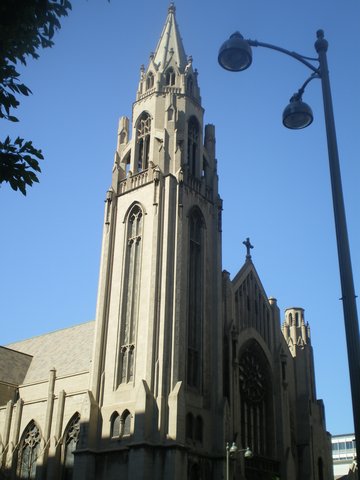
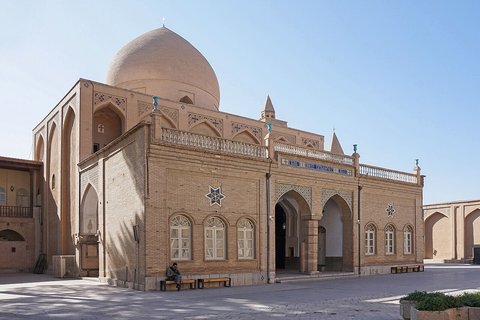
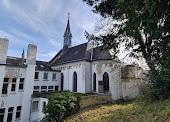
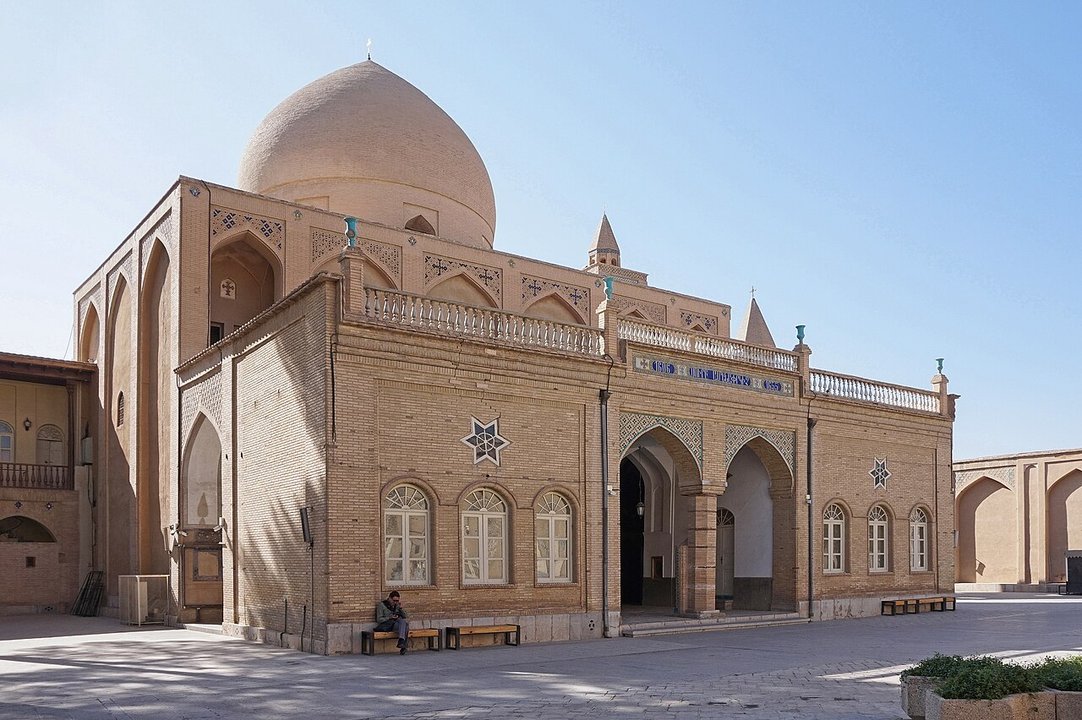
The cathedral on this site is dated to 1606 in some accounts and to 1655 in others, and the building took its present form in works carried out between 1655 and 1664. It holds a library of more than seven hundred manuscripts and a museum of the quarter's documents, including farmans issued by Abbas I. A memorial to the Armenian genocide stands in the courtyard.
📸 Cover: Vank Cathedral, Bernard Gagnon, CC BY-SA 4.0 via Wikimedia Commons.

_at_World_Economic_Forum_Davos_2023_thumbnail.png)

changes?
delete this memory?
We detected that you have a Blox in your crypto wallet! We will import the Blox into your account.
Click on done below to complete the import.
Welcome Back!
Sign in to preserve cherished moments
Don't have an account?
Welcome!!
Sign up and start preserving cherished moments
?
?
Choose your payment method
Buy with Metablox Credit
Do you want to mint Blox with Metablox Credit?
Which Crypto would you like to use?
Purchase Confirmed!
Your Blox is being minted on-chain and will appear in your profile shortly.
Log in or sign up to claim your Blox.
How many credits do you want to buy?
$100 USD = 1 Metablox Credit = 1 Blox.
Use Metablox Credit to mint any Blox you want on the map.
 expand_more