


Military History | La Ferté-sous-Jouarre Memorial — The Men Who Landed in the Month of August
· 1928-11
Unreviewed contributionBy kevin · · updated · Report an issue































































Find memories left by people near you.
Distribute Bounty
This will distribute the bounty equally among all qualifying memories. This action cannot be undone.
Cancel Bounty
Are you sure you want to cancel this bounty? The remaining amount will be refunded to your account.
Success!
Operation completed successfully.
Error
Something went wrong.
Military History | La Ferté-sous-Jouarre Memorial — The Men Who Landed in the Month of August
kevin
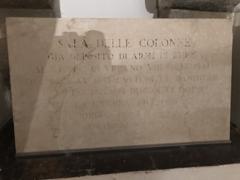
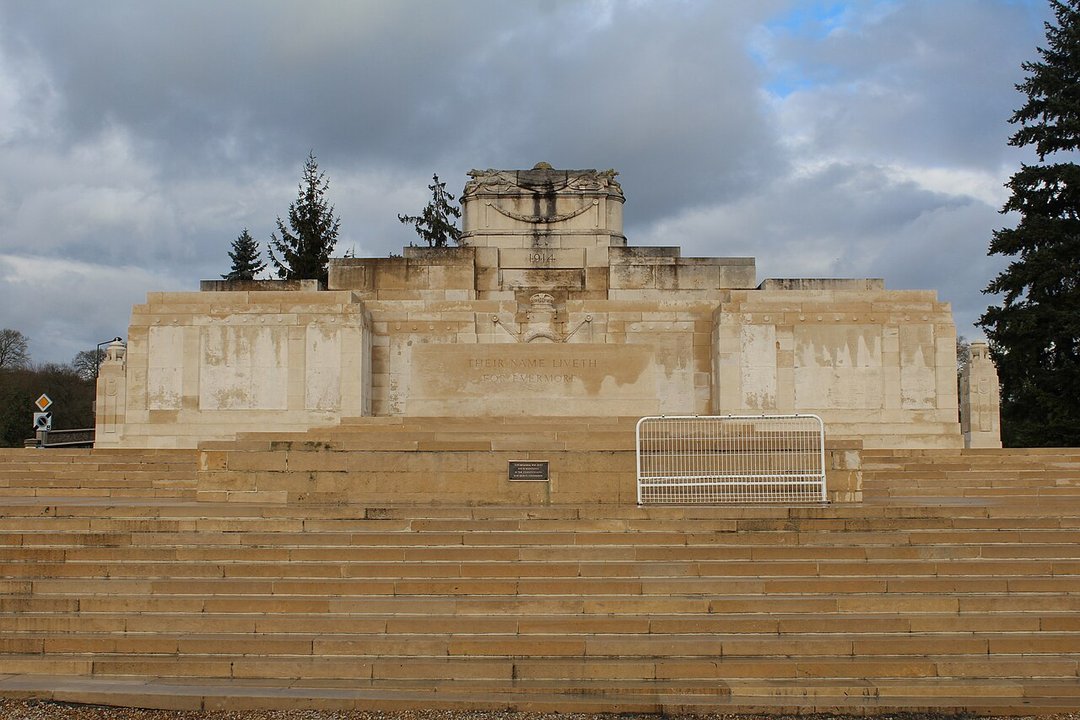
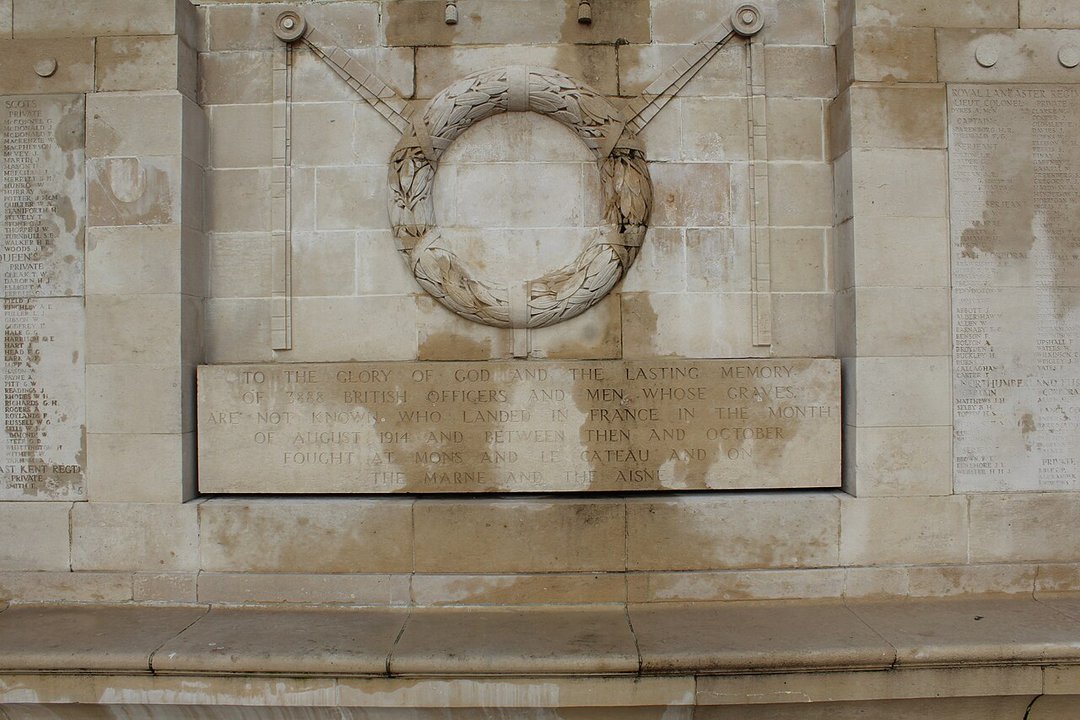
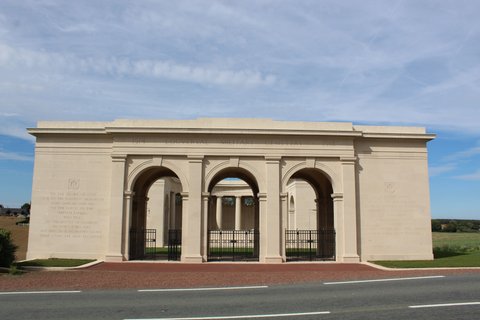
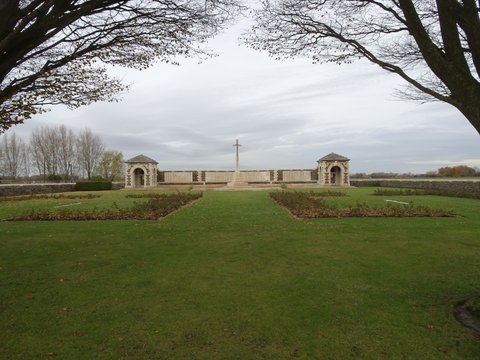
On one face of a white stone block beside the Marne the dedication is cut in English, and on the other in French. The English panel reads TO THE GLORY OF GOD AND THE LASTING MEMORY OF 3888 BRITISH OFFICERS AND MEN WHOSE GRAVES ARE NOT KNOWN WHO LANDED IN FRANCE IN THE MONTH OF AUGUST 1914 AND BETWEEN THEN AND OCTOBER FOUGHT AT MONS AND LE CATEAU AND ON THE MARNE AND THE AISNE.
That commemorates by a month rather than by a battlefield. Mons is in Belgium, Le Cateau in the Nord, the Aisne a different river, and the fighting of those weeks crossed all of it and settled nowhere. With no single field to put the names on, the British Expeditionary Force's missing of its first ten weeks were gathered onto a block in a town where the army had been stopped by a river.
The British official history records that during the advance after the Marne the bridges along the British front had not been destroyed, except at La Ferté-sous-Jouarre and two villages west of it. III Corps, under Lieutenant-General Sir William Pulteney, spent 9 September 1914 on the south bank. German snipers and machine guns in the buildings opposite kept men off the wrecked bridges; two battalions crossed downstream over a weir, in single file on a broken plank footway. Before noon the infantry pulled back from the town's southern half, and British guns bombarded it heavily. Repair work began after four, and a floating bridge was finished at seven next morning.
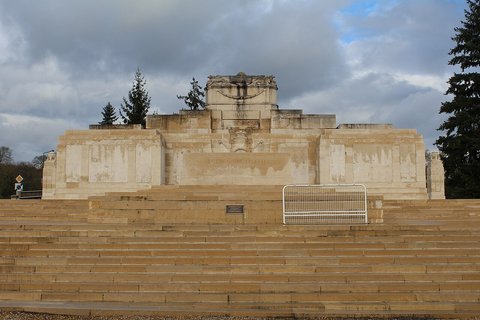
George H. Goldsmith designed it, a rectangular block carrying a stone sarcophagus with 1914 cut beneath it, and carved shields on the corner pillars of its pavement, England and Scotland among them. Pulteney unveiled it on 4 November 1928.
The block's own figure is 3888. Published register counts differ and none is printed here. THEIR NAME LIVETH FOR EVERMORE runs along the plinth, and a bronze plaque credits the Commonwealth War Graves Commission with building and maintaining it. The steps come down to a square in the town centre, houses and shopfronts opposite.
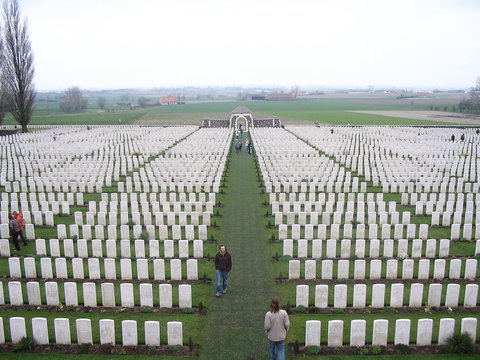
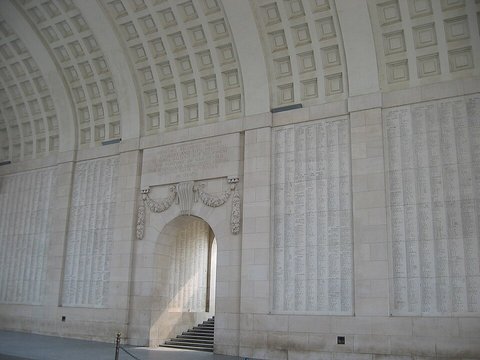
📸 Cover: the memorial from the steps, the sarcophagus and the plinth inscription — Chabe01, CC BY-SA 4.0, via Wikimedia Commons. Second image: the English dedication panel under its carved wreath, flanked by name panels — Chabe01, CC BY-SA 4.0.
changes?
delete this memory?
We detected that you have a Blox in your crypto wallet! We will import the Blox into your account.
Click on done below to complete the import.
Welcome Back!
Sign in to preserve cherished moments
Don't have an account?
Welcome!!
Sign up and start preserving cherished moments
?
?




Choose your payment method
Buy with Metablox Credit
Do you want to mint Blox with Metablox Credit?
Which Crypto would you like to use?
Purchase Confirmed!
Your Blox is being minted on-chain and will appear in your profile shortly.
Log in or sign up to claim your Blox.
How many credits do you want to buy?
$100 USD = 1 Metablox Credit = 1 Blox.
Use Metablox Credit to mint any Blox you want on the map.
 expand_more