


Architecture History | Fray Bentos Industrial Landscape — The 1924 Cold-Chain Turn Across a River Factory
· 1924
Unreviewed contributionBy kevin · · updated · Report an issue




















































Find memories left by people near you.
Distribute Bounty
This will distribute the bounty equally among all qualifying memories. This action cannot be undone.
Cancel Bounty
Are you sure you want to cancel this bounty? The remaining amount will be refunded to your account.
Success!
Operation completed successfully.
Error
Something went wrong.
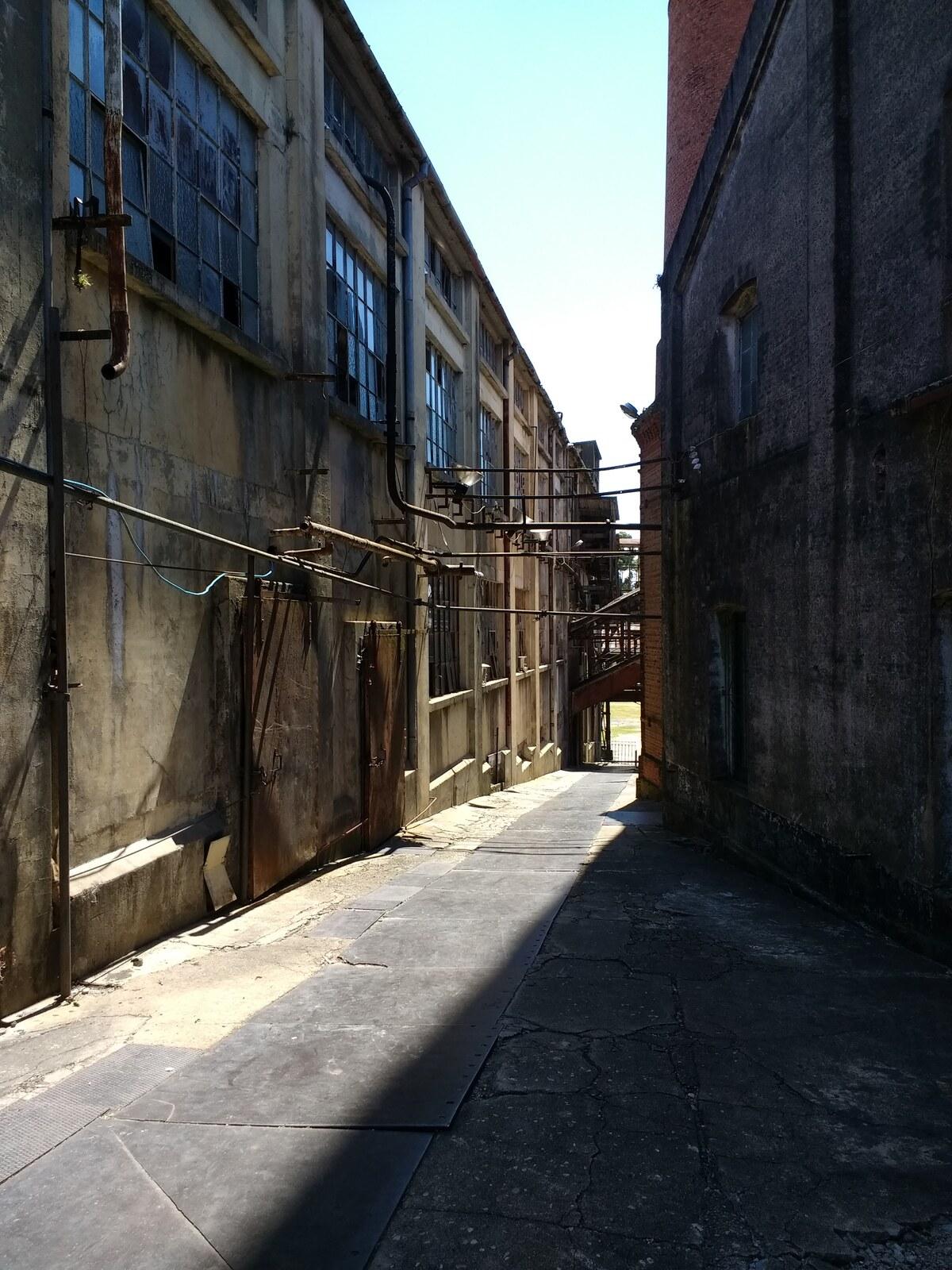
Architecture History | Fray Bentos Industrial Landscape — The 1924 Cold-Chain Turn Across a River Factory
kevin
After the English Vestey Group took over Fray Bentos in 1924, cattle, workers, cans, machinery and frozen meat moved through a river-edge complex already shaped by six decades of industrial change. The site spread inland from its dock in sawtooth-roofed workshops, while a tall brick boiler chimney and an enormous cold store rose above the lower sheds. This was not one freestanding factory building but a linked production landscape: stock route and holding pens, slaughter and rendering rooms, extract and tin departments, refrigeration plant, stores, internal roads, conveyors, aerial tunnels and the Uruguay River landing.
The sequence began before Anglo. Richard Hughes established a meat-salting works at the natural harbour in 1859, and German engineer Georg Giebert acquired the property in 1863. From 1865, the Liebig Extract of Meat Company used Justus von Liebig’s process to make meat extract and corned beef for export. Brick buildings with timber or cast-iron roof structures accumulated around the production line, while housing, a school, hospital, clubs and other services grew beside the works for a workforce drawn from many countries.
Vestey’s 1924 takeover changed both the product and the architecture. Frozen export required a continuous cold chain, so the Anglo phase added a large cold store and a machine room for its ammonia compressor. ICOMOS records these 1920s buildings as prefabricated steel structures imported from England, with concrete floors and walls. They joined older boilers, workshops and circulation systems rather than erasing them. The resulting fabric makes industrial change legible: equipment and buildings from different periods remain connected along the route from pasture and pens to processing, packing, refrigeration and ship.
The architecture also organized a company settlement. At its mid-century height, the plant employed thousands in a town of about 12,000, and more than fifty nationalities were represented in the workforce. Those workers and their families sustained the production system, cooperative life and surrounding Barrio Anglo; some descendants still live in the residential sector and contribute to its oral history. Their experience complicates any account that treats the place only as a triumph of technology or British enterprise.
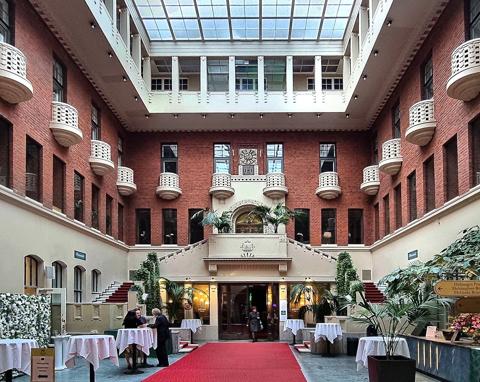
Production declined after 1950, the plant closed in 1979, and the complex was finally vacated in 1985. Part became the Museum of the Industrial Revolution in 2005, while other buildings acquired municipal, industrial, social and cultural uses. UNESCO inscribed the Fray Bentos Industrial Landscape in 2015. Today the protected ensemble still shows the cold store, machine rooms, workshops, dock, workers’ housing and connective infrastructure, but the factory interior should be entered only on authorized museum routes. The 2017 photograph records one surviving industrial passage and its pipes and bridges; it does not claim to show the site exactly as it appeared in 1924.
Photo: Mx. Granger, 19 November 2017, CC0 1.0, via Wikimedia Commons.
changes?
delete this memory?
We detected that you have a Blox in your crypto wallet! We will import the Blox into your account.
Click on done below to complete the import.
Welcome Back!
Sign in to preserve cherished moments
Don't have an account?
Welcome!!
Sign up and start preserving cherished moments
?
?


Choose your payment method
Buy with Metablox Credit
Do you want to mint Blox with Metablox Credit?
Which Crypto would you like to use?
Purchase Confirmed!
Your Blox is being minted on-chain and will appear in your profile shortly.
Log in or sign up to claim your Blox.
How many credits do you want to buy?
$100 USD = 1 Metablox Credit = 1 Blox.
Use Metablox Credit to mint any Blox you want on the map.
 expand_more