


Dynastic History | Hwanggungu 황궁우 — The Rite a Tributary King Could Not Perform
· 1897-10
Unreviewed contributionBy kevin · · Report an issue



_In_Ballsbridge_-_panoramio.jpg)


























Find memories left by people near you.
Distribute Bounty
This will distribute the bounty equally among all qualifying memories. This action cannot be undone.
Cancel Bounty
Are you sure you want to cancel this bounty? The remaining amount will be refunded to your account.
Success!
Operation completed successfully.
Error
Something went wrong.
Dynastic History | Hwanggungu 황궁우 — The Rite a Tributary King Could Not Perform
kevin
A round altar to Heaven was the prerogative of a Son of Heaven, and Joseon, tributary to the Ming, was not one. Sacrifices at a 환구단 were performed briefly in the 1450s and stopped in 1464, in Sejo's tenth year. After that the dynasty's highest rite was to its own ancestors at 종묘 — a ceiling on ritual rank that the court accepted in writing.
By 1897 the calculation had changed. Qing suzerainty over Korea had been ended by the treaty closing the war of 1894–95, and Gojong, back from a year's refuge in the Russian legation, had an altar raised on the grounds of 남별궁, the compound where Chinese envoys had been received. It went up in weeks. At about three in the morning on 12 October 1897 he performed the rite to Heaven and Earth and took the title emperor of 대한제국, the Great Korean Empire.
The accounts of that morning are not the state's. 독립신문 reported the ceremony; Yun Chi-ho wrote in his diary that heavy rain made it an inconvenience to those attending; the foreign-run Korean Repository described the scene from outside. Foreign recognition of the new title followed over the next year, beginning with Russia. The empire lasted until the annexation of 1910.
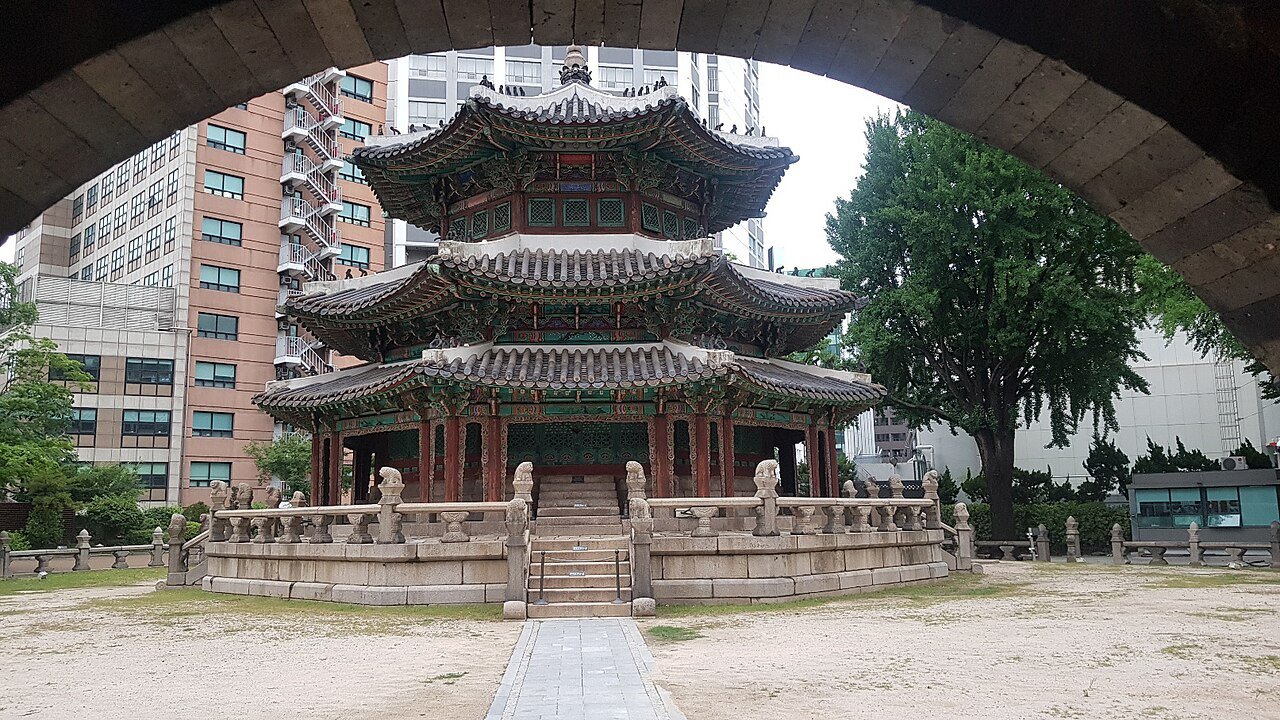
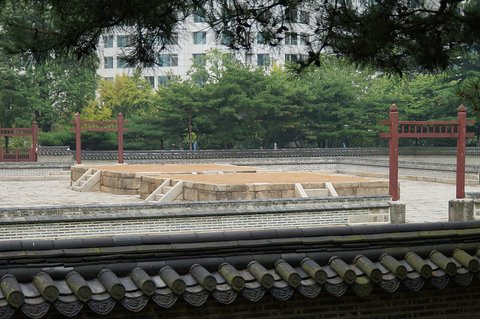
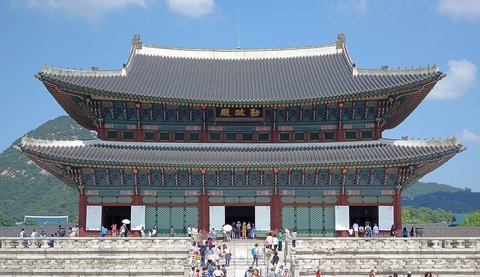
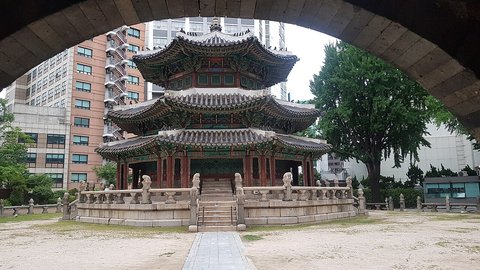
The colonial government cleared the altar in 1912–13 — sources differ on the year — and the railway administration's Chōsen Hotel opened on the site in 1914. What survives stands in a courtyard behind the hotel that replaced it: 황궁우, the octagonal shrine of 1899 that held the tablets, and three carved stone drums made in 1902 to mark the fortieth year of Gojong's reign. The gate is open and entry is free.
📸 Cover: Hwanggungu, the octagonal shrine of 1899, seen from the gate arch — 올리브 가지, CC BY-SA 4.0 via Wikimedia Commons
changes?
delete this memory?
We detected that you have a Blox in your crypto wallet! We will import the Blox into your account.
Click on done below to complete the import.
Welcome Back!
Sign in to preserve cherished moments
Don't have an account?
Welcome!!
Sign up and start preserving cherished moments
?
?
Choose your payment method
Buy with Metablox Credit
Do you want to mint Blox with Metablox Credit?
Which Crypto would you like to use?
Purchase Confirmed!
Your Blox is being minted on-chain and will appear in your profile shortly.
Log in or sign up to claim your Blox.
How many credits do you want to buy?
$100 USD = 1 Metablox Credit = 1 Blox.
Use Metablox Credit to mint any Blox you want on the map.
 expand_more