


Military History | Beaumont-Hamel Newfoundland Memorial — Sixty-Eight Answered the Next Morning
· 1916-7
Personal memoryBy kevin · · Report an issue






































Find memories left by people near you.
Distribute Bounty
This will distribute the bounty equally among all qualifying memories. This action cannot be undone.
Cancel Bounty
Are you sure you want to cancel this bounty? The remaining amount will be refunded to your account.
Success!
Operation completed successfully.
Error
Something went wrong.
Military History | Beaumont-Hamel Newfoundland Memorial — Sixty-Eight Answered the Next Morning
kevin
The Newfoundland Regiment went forward at 9:15 on the morning of 1 July 1916, more than an hour after the first waves and from further back than most. Its start line was St John's Road, a support trench the men had dug themselves, roughly 250 metres behind the British front line.
Communication trenches ahead were blocked with wounded, so the battalion climbed out and crossed its own ground in the open. The German 119th Reserve Regiment held the slope opposite, fortified in depth.
The figures depend on who is counting. The Royal Newfoundland Regiment Museum works from the war diary: 801 on strength, about eighty left out of battle, 721 committed, 619 casualties — 14 officers and 219 other ranks killed, 12 officers and 374 other ranks wounded. The Newfoundland heritage site gives 324 killed or missing and presumed dead, and 386 wounded. Veterans Affairs Canada writes it as roughly 800 in and more than 700 down.
All three agree on the number at roll call the next morning: 68.
Partway down the slope stands the Danger Tree, a shattered trunk traditionally said to mark the furthest point the regiment reached. The regimental museum itself hedges the claim.
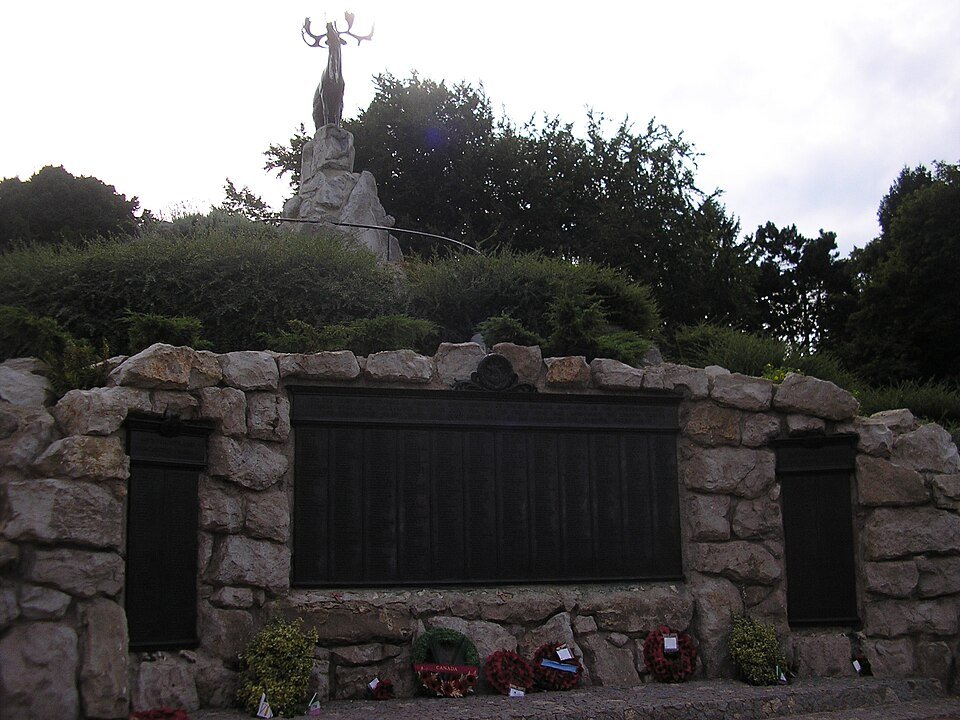
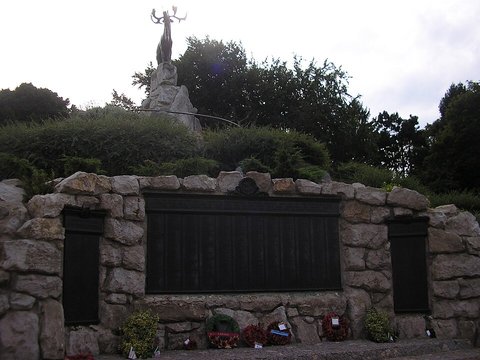
Newfoundland was a separate dominion then, and it bought this ground in 1921. Rudolph Cochius laid out the park; Basil Gotto's bronze caribou stands on a mound above the old lines; Field Marshal Earl Haig opened it on 7 June 1925.
Three bronze tablets at the base of the mound carry the names of Newfoundlanders with no known grave — 820 by one count, 821 by another.
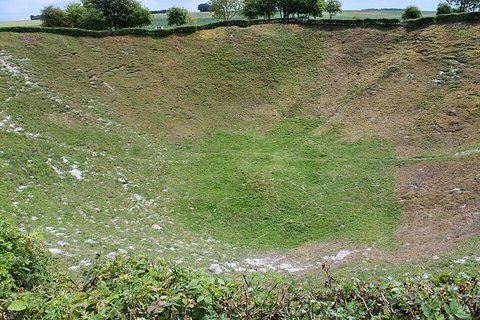
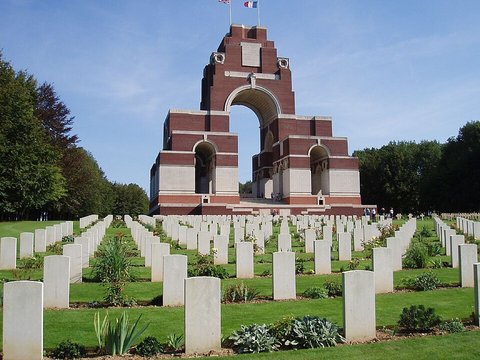
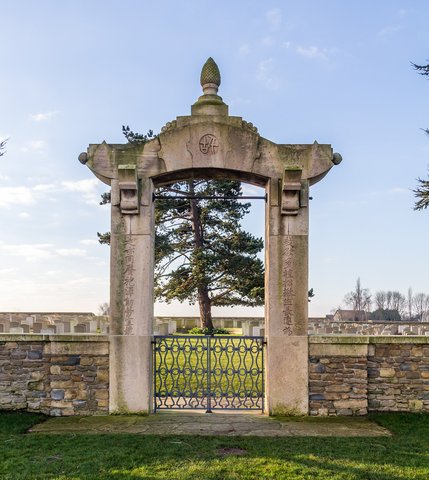
Roughly thirty hectares of trench line and shell ground survive here, with war cemeteries inside the park. Veterans Affairs Canada has administered the site since Newfoundland joined Canada in 1949.
📸 Cover: the caribou on its mound above the three bronze tablets — Beatpoet, CC BY-SA 3.0, via Wikimedia Commons.


changes?
delete this memory?
We detected that you have a Blox in your crypto wallet! We will import the Blox into your account.
Click on done below to complete the import.
Welcome Back!
Sign in to preserve cherished moments
Don't have an account?
Welcome!!
Sign up and start preserving cherished moments
?
?
Choose your payment method
Buy with Metablox Credit
Do you want to mint Blox with Metablox Credit?
Which Crypto would you like to use?
Purchase Confirmed!
Your Blox is being minted on-chain and will appear in your profile shortly.
Log in or sign up to claim your Blox.
How many credits do you want to buy?
$100 USD = 1 Metablox Credit = 1 Blox.
Use Metablox Credit to mint any Blox you want on the map.
 expand_more