
Military History | St George's Memorial Church, Ieper — Where the War Graves Staff Sent Their Children
· 1929-3
Personal memoryBy kevin · · Report an issue




















































Find memories left by people near you.
Distribute Bounty
This will distribute the bounty equally among all qualifying memories. This action cannot be undone.
Cancel Bounty
Are you sure you want to cancel this bounty? The remaining amount will be refunded to your account.
Success!
Operation completed successfully.
Error
Something went wrong.
Military History | St George's Memorial Church, Ieper — Where the War Graves Staff Sent Their Children
kevin
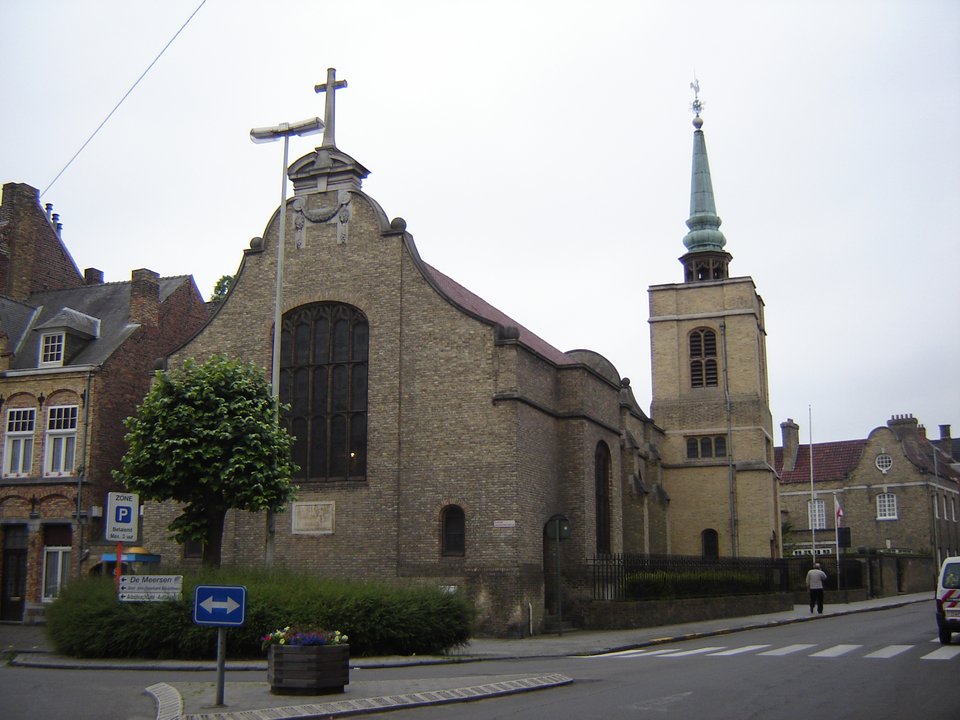
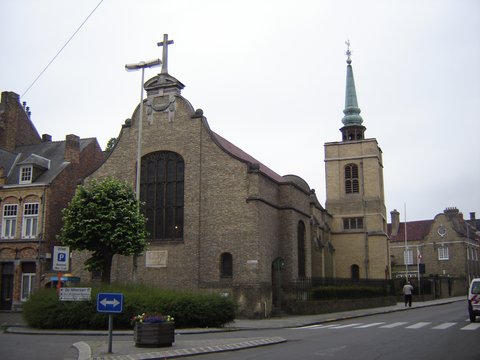
On Palm Sunday, 24 March 1929, the Bishop of Fulham opened an English church on a corner site in Ieper (Ypres) and, in the same act, the school built beside it.
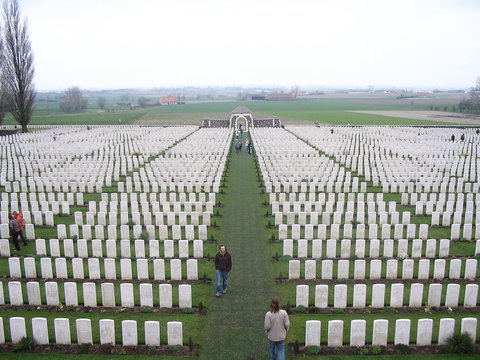
The pair answered a problem the Imperial War Graves Commission's own work had created. Building and then tending the cemeteries and memorials of the Ypres Salient required a permanent British workforce of gardeners, masons and clerks, and those men brought wives and children to a Flemish-speaking town that four years of shelling had flattened.
Sir Reginald Blomfield designed both buildings and Jules Anneessens built them. Blomfield had also designed the Menin Gate and the Cross of Sacrifice that stands in Commission cemeteries.
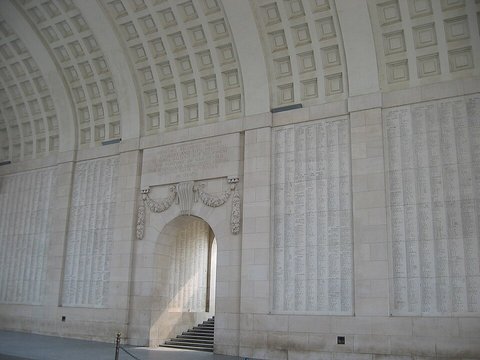
The campaign ran through the Ypres League, with Field Marshal Sir John French, Earl of Ypres, at its head. Lord Plumer laid the foundation stone on 24 July 1927, the day the Menin Gate was unveiled about six hundred metres east.
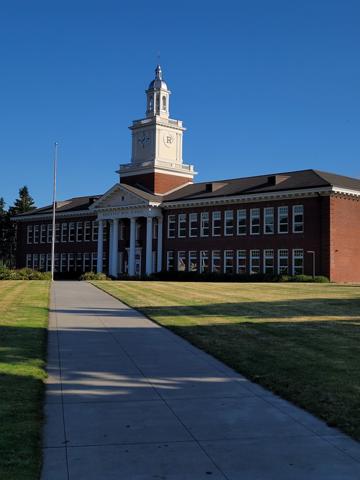
The school opened as the Eton Memorial School, its cost borne almost entirely by the parents and comrades of Eton College men killed in the war; the Flemish heritage inventory puts their number at 342. Its first pupils arrived on 9 April 1929, and it later took the plainer name of the British Memorial School.
It closed in May 1940 when the German army entered Belgium and the British families left. Too few came back for it to reopen, and the building became a clubhouse for the town's British community, mostly Commonwealth War Graves Commission staff.
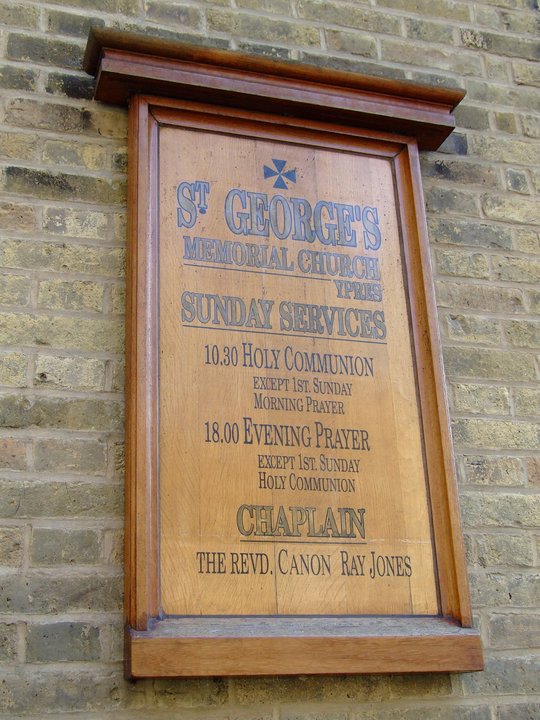
The church is open daily, and nearly every object inside was given by someone with a reason to remember Ypres: windows, kneelers, chairs, regimental banners, brass. The oak notice board by the door still spells the town Ypres, in English, and lists the Sunday services.
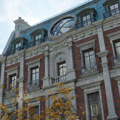
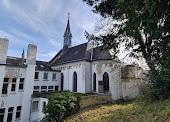
📸 Cover: the church from the street, with the lower school range at right — LimoWreck, CC BY 2.5; the oak notice board — R/DV/RS, CC BY 2.0; both via Wikimedia Commons


changes?
delete this memory?
We detected that you have a Blox in your crypto wallet! We will import the Blox into your account.
Click on done below to complete the import.
Welcome Back!
Sign in to preserve cherished moments
Don't have an account?
Welcome!!
Sign up and start preserving cherished moments
?
?



Choose your payment method
Buy with Metablox Credit
Do you want to mint Blox with Metablox Credit?
Which Crypto would you like to use?
Purchase Confirmed!
Your Blox is being minted on-chain and will appear in your profile shortly.
Log in or sign up to claim your Blox.
How many credits do you want to buy?
$100 USD = 1 Metablox Credit = 1 Blox.
Use Metablox Credit to mint any Blox you want on the map.
 expand_more