


Biography | Henry Dunant — The Town Hall Treaty That Put Neutral Care into Law
· 1864-8
Unreviewed contributionBy kevin · · Report an issue



































































Find memories left by people near you.
Distribute Bounty
This will distribute the bounty equally among all qualifying memories. This action cannot be undone.
Cancel Bounty
Are you sure you want to cancel this bounty? The remaining amount will be refunded to your account.
Success!
Operation completed successfully.
Error
Something went wrong.

Biography | Henry Dunant — The Town Hall Treaty That Put Neutral Care into Law
kevin
On 22 August 1864, representatives of twelve states signed the first Geneva Convention at Geneva’s Hôtel de Ville.
The treaty was the legal answer to a problem Henry Dunant had carried away from the wounded of Solferino: compassion improvised after a battle could not protect medical work before the next one began.
Dunant did not sign here as a state delegate, and the convention was not his work alone.
The International Committee of the Red Cross records that Dunant and four Geneva colleagues organized the diplomatic process that led to adoption, while the Swiss government formally convened the conference.
From 8 to 22 August, delegates met in the room now known as the Alabama Room and negotiated a compact between governments.
Its rules required wounded soldiers to be collected and cared for without discrimination by nationality.
They also protected military medical services and recognized the red cross on a white ground as an identifying emblem for protected personnel and facilities.
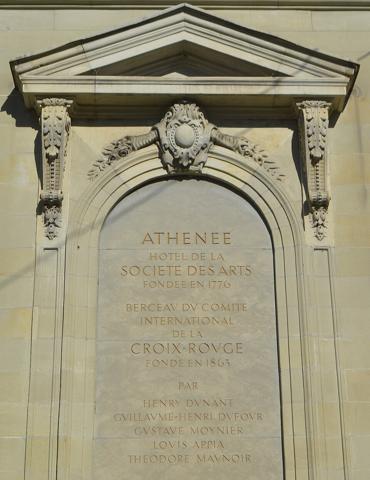
That shift mattered because the October 1863 conference at the Athénée had established a voluntary relief movement; this meeting bound states through an international treaty.
The convention was brief, but it gave legal form to the combination Dunant had proposed in “A Memory of Solferino”: organized civilian aid supported by agreed protection in wartime.
It also became the starting point of the treaty tradition now called international humanitarian law.
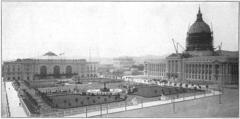
The pin marks the documented public Town Hall building, using the coordinates of its courtyard, not the Alabama Room, an entrance, an office, or any restricted interior.
The attached photograph was taken in 2008 and shows that courtyard as architectural context. It is not an image of the 1864 delegates or the signing.
Here a campaign that began with testimony from a battlefield passed beyond one advocate and became an obligation accepted by governments.
Photo: Bart van Poll, 2008, CC BY-SA 2.0, via Wikimedia Commons.



changes?
delete this memory?
We detected that you have a Blox in your crypto wallet! We will import the Blox into your account.
Click on done below to complete the import.
Welcome Back!
Sign in to preserve cherished moments
Don't have an account?
Welcome!!
Sign up and start preserving cherished moments
?
?







Choose your payment method
Buy with Metablox Credit
Do you want to mint Blox with Metablox Credit?
Which Crypto would you like to use?
Purchase Confirmed!
Your Blox is being minted on-chain and will appear in your profile shortly.
Log in or sign up to claim your Blox.
How many credits do you want to buy?
$100 USD = 1 Metablox Credit = 1 Blox.
Use Metablox Credit to mint any Blox you want on the map.
 expand_more