


Biography | Henry Dunant — The Athénée Conference That Turned a Book into a Movement
· 1863-10
Unreviewed contributionBy kevin · · Report an issue



























































Find memories left by people near you.
Distribute Bounty
This will distribute the bounty equally among all qualifying memories. This action cannot be undone.
Cancel Bounty
Are you sure you want to cancel this bounty? The remaining amount will be refunded to your account.
Success!
Operation completed successfully.
Error
Something went wrong.
Biography | Henry Dunant — The Athénée Conference That Turned a Book into a Movement
kevin
On 26 October 1863, delegates entered the Palais de l’Athénée in Geneva for a conference that would turn Henry Dunant’s proposals into an organized international program.
Dunant had published “A Memory of Solferino” the previous year, combining his account of wounded soldiers in northern Italy with two practical ideas.
He called for volunteer relief societies prepared in peacetime and for an international agreement protecting the wounded and those who assisted them.
The Geneva Society for Public Welfare formed a five-member committee in February 1863 to pursue those proposals, bringing Dunant together with Guillaume-Henri Dufour, Gustave Moynier, Louis Appia, and Théodore Maunoir.
The October meeting was therefore not a solo achievement, but it was the point at which Dunant’s appeal faced representatives capable of translating it into common rules.
The ICRC’s historical archive dates the conference to 26–29 October and describes it as the gathering that formalized the ideas in “A Memory of Solferino.”
The resolutions adopted during those four days set out the framework for national relief committees, volunteer medical assistance, and a shared identifying emblem based on a red cross on a white ground.
They became the movement’s first operational charter and prepared the way for the diplomatic convention negotiated in Geneva in August 1864.
That sequence matters because the conference did not itself create all later humanitarian law.
Instead, it connected a witness’s book, a small Geneva committee, national organizers, and governments in a process that could survive beyond one battlefield.
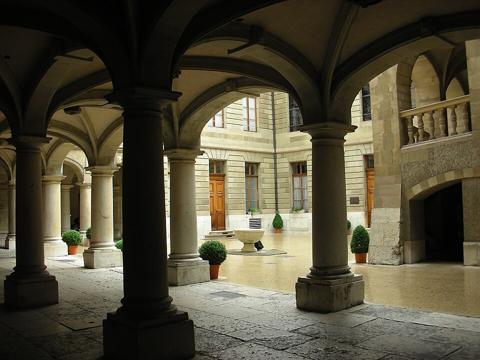
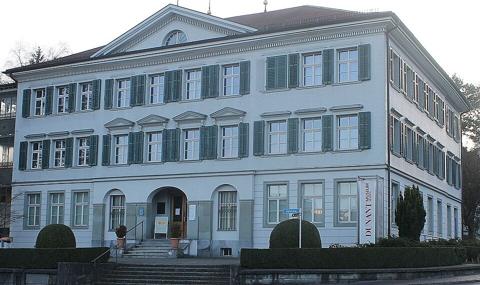
The Palais de l’Athénée anchors that institutional transformation to a specific civic building rather than to the city in general.
Its address is Rue de l’Athénée 2, and the pin marks the documented public building coordinates without identifying an interior room, entrance, office, or present-day route.
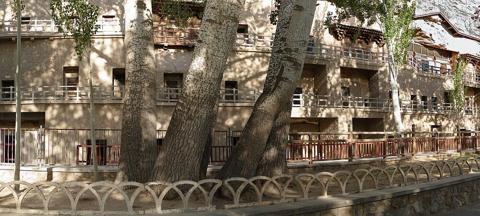
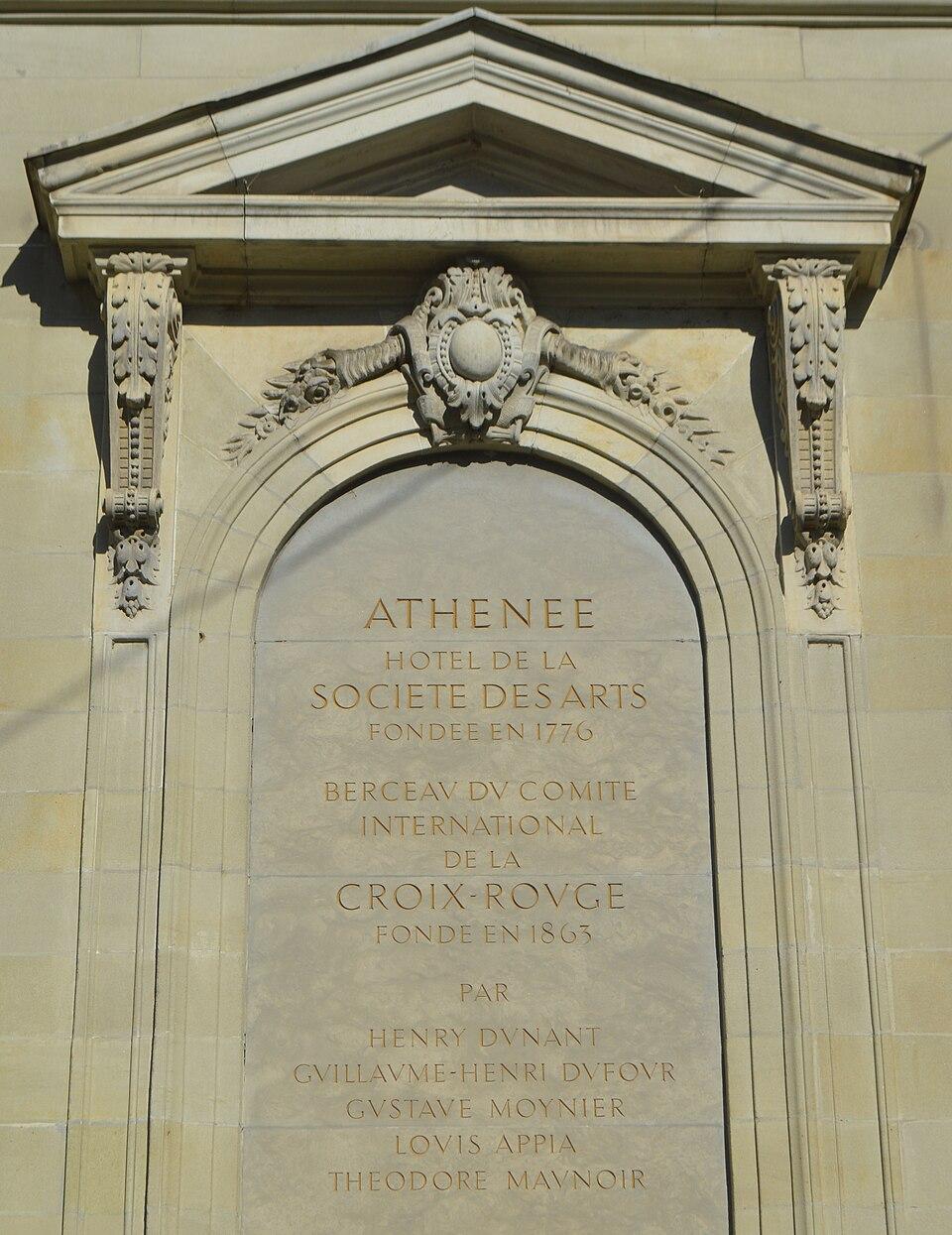
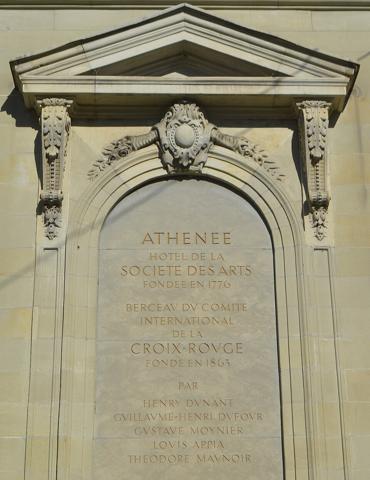
A commemorative plaque on the building names Dunant and the other four committee members and identifies the site as the cradle of the organization founded in 1863.
The attached photograph was made in 2020 and records that plaque as present-day historical evidence, not as an image of the nineteenth-century conference.
Here, Dunant’s moral argument left the page and entered a room where collective procedure gave it durable form.
Photo: RomanDeckert, 2020, CC BY-SA 4.0, via Wikimedia Commons.
changes?
delete this memory?
We detected that you have a Blox in your crypto wallet! We will import the Blox into your account.
Click on done below to complete the import.
Welcome Back!
Sign in to preserve cherished moments
Don't have an account?
Welcome!!
Sign up and start preserving cherished moments
?
?







Choose your payment method
Buy with Metablox Credit
Do you want to mint Blox with Metablox Credit?
Which Crypto would you like to use?
Purchase Confirmed!
Your Blox is being minted on-chain and will appear in your profile shortly.
Log in or sign up to claim your Blox.
How many credits do you want to buy?
$100 USD = 1 Metablox Credit = 1 Blox.
Use Metablox Credit to mint any Blox you want on the map.
 expand_more