


Military History | Montfaucon American Monument — The Ruins That Fixed Its Size
· 1937-8
Unreviewed contributionBy kevin · · Report an issue


















































Find memories left by people near you.
Distribute Bounty
This will distribute the bounty equally among all qualifying memories. This action cannot be undone.
Cancel Bounty
Are you sure you want to cancel this bounty? The remaining amount will be refunded to your account.
Success!
Operation completed successfully.
Error
Something went wrong.
Military History | Montfaucon American Monument — The Ruins That Fixed Its Size
kevin
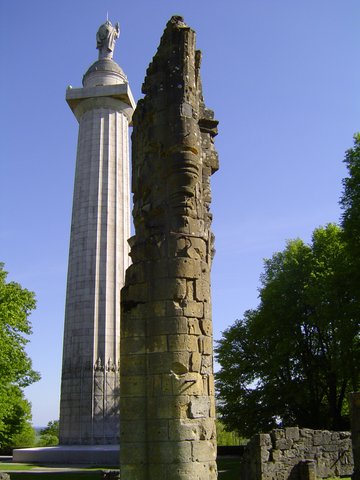
The butte at Montfaucon-d'Argonne carried a village, a twelfth-century collegiate church, and from early 1915 a German artillery observation post looking south over what became the American sector. A frontal attack by the 79th Division on 26 September 1918 failed; once the 4th and 37th Divisions had pushed past the hill on either side, the 79th took it the following day. The village was gone, and it was not put back. A new Montfaucon-d'Argonne was built on lower ground and the old site was left standing as it fell.
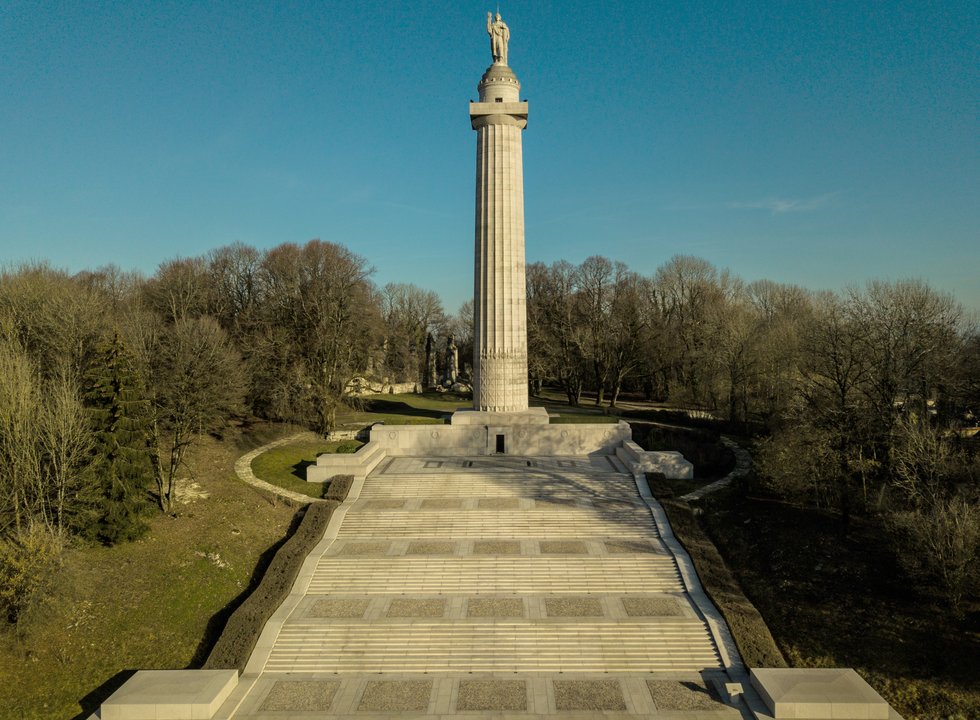
That is what fixed the shape of everything raised there since. The French ministry of fine arts administered the wreckage as vestiges de guerre and would not have it cleared. Paul Cret, surveying sites for the American Battle Monuments Commission in 1925, reported the restriction as an advantage — "all the surroundings of the memorial remind the tourist of the grim realities of the war" — and noted that the ruined cellars and terraces left roughly 120 by 200 feet to build on. John Russell Pope answered with a column, the Montfaucon American Monument, called on French maps the Monument américain de Montfaucon. It went up between 1929 and 1933, carrying a figure of Columbia modelled by A. A. Weinman and cut by Fratelli Poli; the contractors were French, and the survey records that the statue was first set facing the wrong way and had to be turned.
About thirty of the surrounding ruins were filled, walled and barred in 1936 so visitors could pass among them. On 24 April 1937 the French state classified the ground, church ruins and blockhouses included, as a monument historique. Pershing dedicated the column that August, on land the Commission holds by perpetual lease.
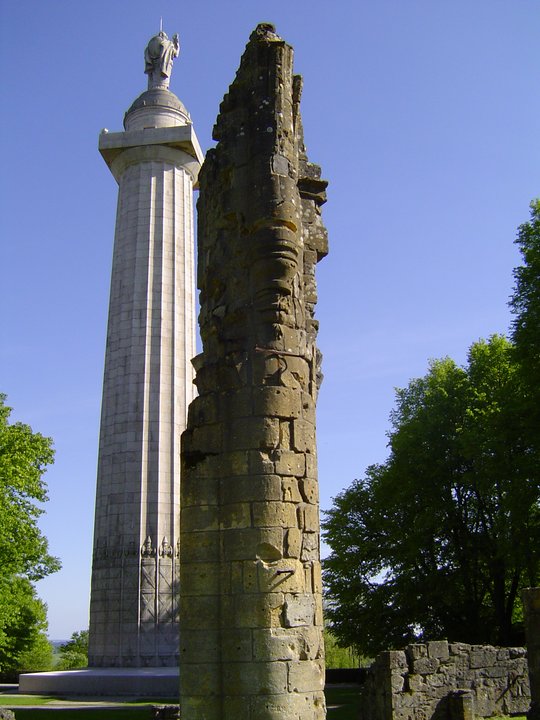
The federal survey calls it a 180-foot column; the Commission's own page measures more than 200 feet above the ruins. Two hundred and thirty-four steps go to the platform. The collegiate ruins stand directly behind it, and the village cemetery beyond is still in use.
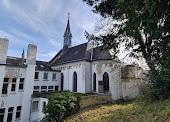
📸 Cover: the monument seen from the ruins of the collégiale Saint-Germain, 2005 — RJ Paap, public domain, via Wikimedia Commons. Second image: the column and its forecourt from the air, 2019 — Michiel Hendryckx, CC BY-SA 4.0.
changes?
delete this memory?
We detected that you have a Blox in your crypto wallet! We will import the Blox into your account.
Click on done below to complete the import.
Welcome Back!
Sign in to preserve cherished moments
Don't have an account?
Welcome!!
Sign up and start preserving cherished moments
?
?




Choose your payment method
Buy with Metablox Credit
Do you want to mint Blox with Metablox Credit?
Which Crypto would you like to use?
Purchase Confirmed!
Your Blox is being minted on-chain and will appear in your profile shortly.
Log in or sign up to claim your Blox.
How many credits do you want to buy?
$100 USD = 1 Metablox Credit = 1 Blox.
Use Metablox Credit to mint any Blox you want on the map.
 expand_more