


NFL History | United States Supreme Court — Radovich and the Exemption Football Did Not Get
· 1957-2
Personal memoryBy kevin · · Report an issue

















































Find memories left by people near you.
Distribute Bounty
This will distribute the bounty equally among all qualifying memories. This action cannot be undone.
Cancel Bounty
Are you sure you want to cancel this bounty? The remaining amount will be refunded to your account.
Success!
Operation completed successfully.
Error
Something went wrong.
NFL History | United States Supreme Court — Radovich and the Exemption Football Did Not Get
kevin
Professional football lost its shot at baseball's antitrust exemption because a guard from Detroit wanted a transfer to Los Angeles and was told no.
Bill Radovich signed with the Detroit Lions in 1938, played four seasons, joined the Navy, and came back to the Lions for 1945. In 1946 his father was ill in California and he asked to be transferred to a Los Angeles club. The Lions refused. Radovich broke his contract and played 1946 and 1947 for the Los Angeles Dons of the All-America Football Conference, in the same Coliseum where the Rams had just signed Kenny Washington.
In 1948 the San Francisco Clippers of the Pacific Coast League offered him a player-coach job. The NFL had him on a blacklist for having played in the rival league, the Clippers were told so, and the offer went away. He sued under the Sherman and Clayton Acts for treble damages.
He lost twice. The district court dismissed the complaint without trial and the Ninth Circuit affirmed. The Supreme Court took the case, heard argument on 17 January 1957, and on 25 February ruled 6–3 in his favour.
The reasoning is narrower than it is usually described. The Court did not say the baseball exemption was correct. It said the exemption belonged to baseball alone, that it would adhere to it but not extend it, and that if there was error or unfairness in that, the orderly remedy was legislation rather than a court decision. Justice Clark wrote the majority. Frankfurter dissented on the ground that antitrust law fits badly over a league, whose clubs jointly produce one product and have to agree on schedules, territories and drafts to produce it at all. Harlan, with Brennan, dissented on the ground that no principled line separated football from baseball.
What tipped it was the television. The opinion turns on the volume of interstate business, and specifically on games transmitted by radio and television into nearly every state. Broadcasting is what made the league large enough to be caught.
Radovich never got his trial. The case was remanded and he settled for $42,500.
What he left behind is the reason almost every later fight over how this sport treats the people who play it has been an antitrust fight: the draft, the reserve clause, Plan B, free agency, relocation. The door those cases walked through was opened on 25 February 1957, and it was opened for a man whose original request was to be nearer his sick father.
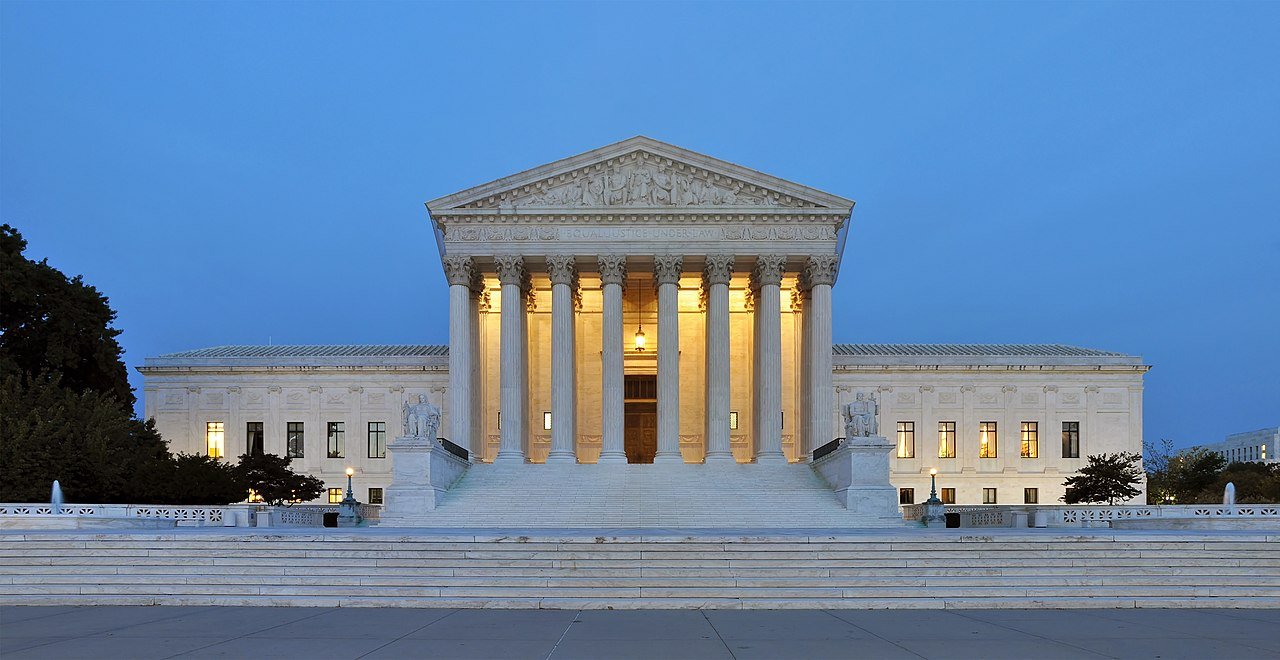
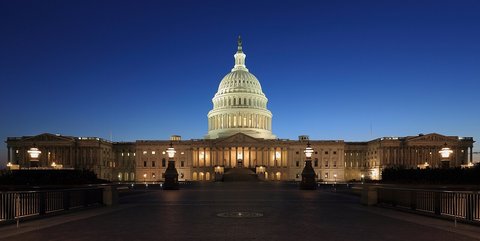
Coordinate: the Supreme Court Building. The Wikidata point and the United States Census geocode of the building's address differ by about 140 m, which is the usual gap between a building centroid and an address point on a structure this size. Precision ±140 m.
Cover: the west facade at dusk. Photo: Joe Ravi, CC BY-SA 3.0, via Wikimedia Commons.
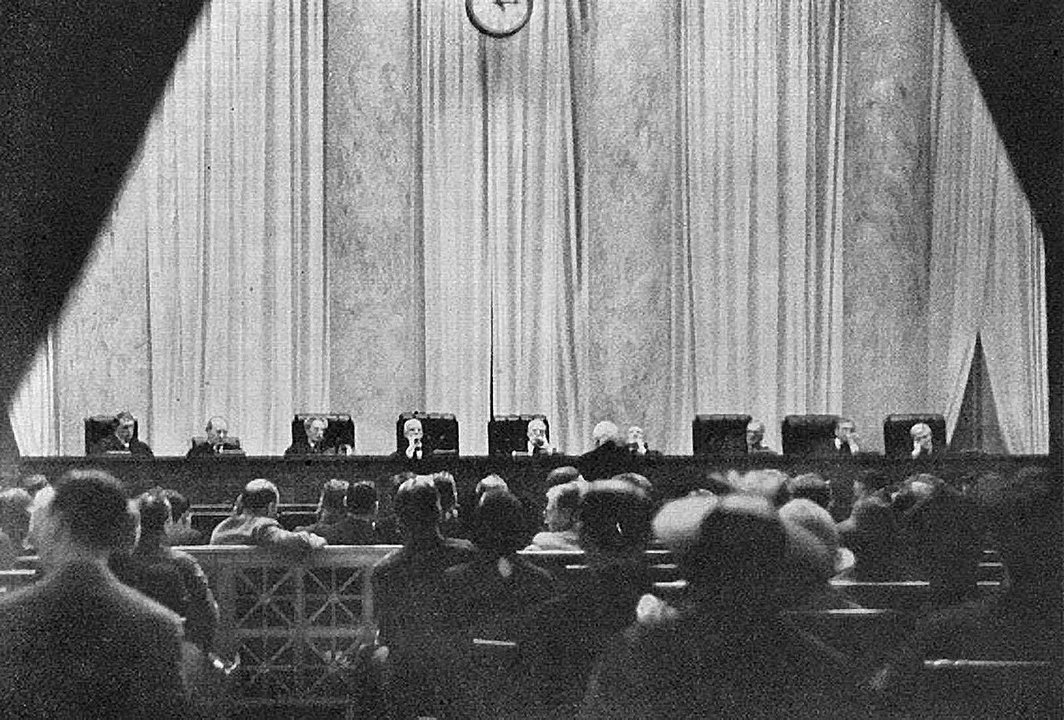
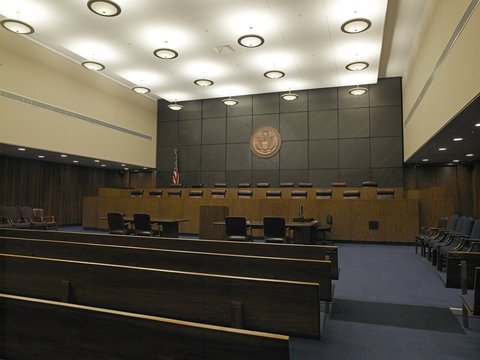
Second image: the Court in session on 7 June 1937, twenty years before this decision and the only known photograph showing all nine justices on the bench. It was taken covertly and the photographer has never been identified. Published in Time; copyright not renewed, public domain, via Wikimedia Commons.

changes?
delete this memory?
We detected that you have a Blox in your crypto wallet! We will import the Blox into your account.
Click on done below to complete the import.
Welcome Back!
Sign in to preserve cherished moments
Don't have an account?
Welcome!!
Sign up and start preserving cherished moments
?
?


Choose your payment method
Buy with Metablox Credit
Do you want to mint Blox with Metablox Credit?
Which Crypto would you like to use?
Purchase Confirmed!
Your Blox is being minted on-chain and will appear in your profile shortly.
Log in or sign up to claim your Blox.
How many credits do you want to buy?
$100 USD = 1 Metablox Credit = 1 Blox.
Use Metablox Credit to mint any Blox you want on the map.
 expand_more