


Semiconductor History | 600 Pennsylvania Avenue, 4 August 2010 — The Order That Put Limits on Intel's Power
Global, Earth · 2010-8
Personal memoryBy kevin · · updated · Report an issue





























Distribute Bounty
This will distribute the bounty equally among all qualifying memories. This action cannot be undone.
Cancel Bounty
Are you sure you want to cancel this bounty? The remaining amount will be refunded to your account.
Success!
Operation completed successfully.
Error
Something went wrong.
Semiconductor History | 600 Pennsylvania Avenue, 4 August 2010 — The Order That Put Limits on Intel's Power
kevin
By 2010 Intel's achievement had become the premise of a government case: x86 compatibility was the center of personal computing, and Intel held the dominant position inside it.
The Federal Trade Commission filed an administrative complaint in December 2009 alleging that Intel had used that position for a decade to hinder competing CPUs, graphics processors, and chipsets. The allegations covered rebates and bundled prices, threats toward computer makers, technical interfaces, compiler behavior, and statements about rival products.
Intel contested the claims.
On 4 August 2010 the company and the FTC announced a proposed settlement at the commission's headquarters on Pennsylvania Avenue. Intel expressly admitted neither a legal violation nor the truth of the allegations, a distinction that belongs in any honest account of the case.
The order nevertheless imposed real limits.
It prohibited certain threats and deals intended to exclude competing CPUs or GPUs, barred deception about competitors' performance, required disclosures when Intel's compiler treated non-Intel processors differently, and protected access to CPU interfaces needed by complementary graphics products. The commission approved a modified final order that November.
There was no single defective transistor to point at here.
The subject was market structure: whether discounts were competition on price or tools that made it harder for rivals to reach computer makers, and whether control over a platform could be used to weaken adjacent products. The settlement chose future rules over waiting years for a final judgment on every allegation.
Intel's strength had been built through good chips, timely design wins, manufacturing investment, software compatibility, and marketing. The FTC case records the other side of that strength, when success gave one supplier enough influence that pricing, code generation, and interface access became matters for a federal order.
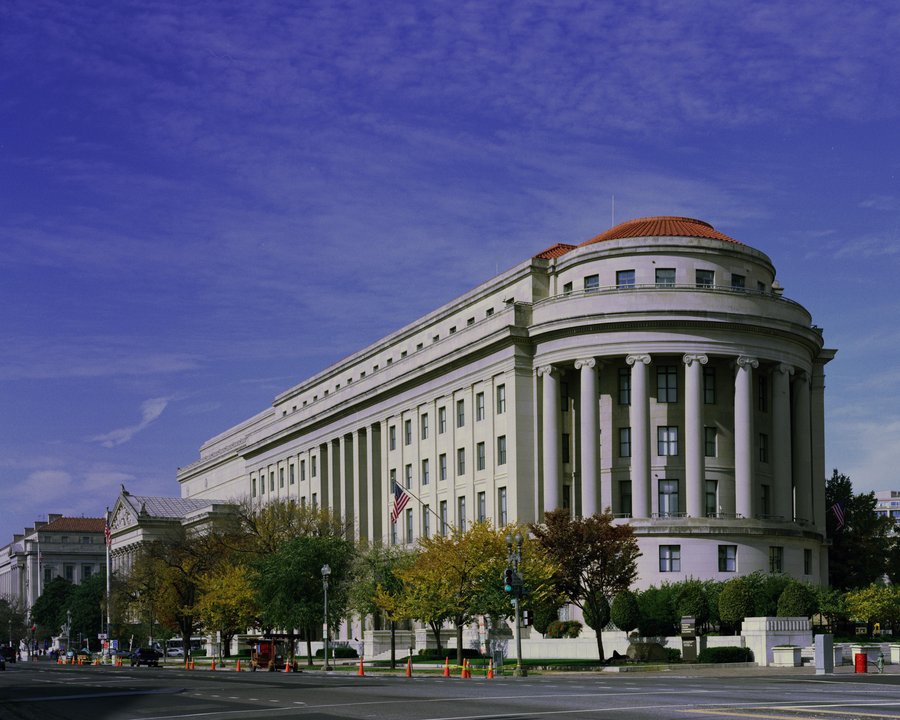
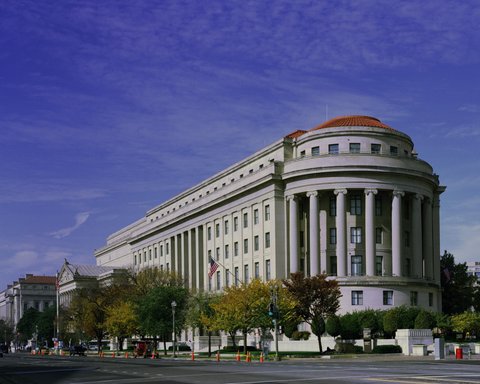
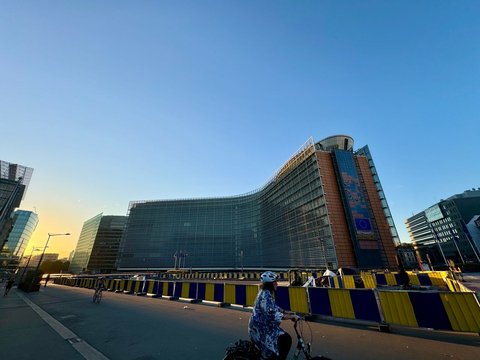
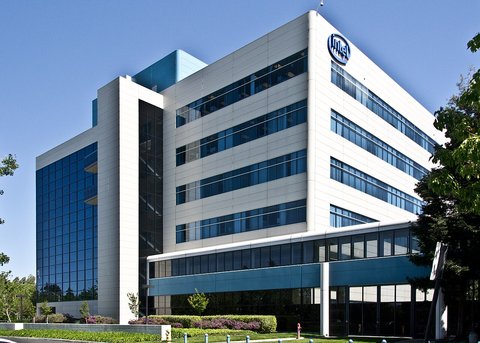
The photograph shows the FTC's Apex Building, completed in 1938 and still occupied by the commission. At street level, the building carries two sculptures titled Man Controlling Trade; the Intel order was written inside.
Photo: Carol M. Highsmith, public domain, via Wikimedia Commons and the Library of Congress.















changes?
delete this memory?
We detected that you have a Blox in your crypto wallet! We will import the Blox into your account.
Click on done below to complete the import.
Welcome Back!
Sign in to preserve cherished moments
Don't have an account?
Welcome!!
Sign up and start preserving cherished moments
?
?







Choose your payment method
Buy with Metablox Credit
Do you want to mint Blox with Metablox Credit?
Which Crypto would you like to use?
Purchase Confirmed!
Your Blox is being minted on-chain and will appear in your profile shortly.
Log in or sign up to claim your Blox.
How many credits do you want to buy?
$100 USD = 1 Metablox Credit = 1 Blox.
Use Metablox Credit to mint any Blox you want on the map.
 expand_more