


Semiconductor History | Intel Headquarters, June 1992 — The Expansion Slot Becomes a Shared Standard
· 1992-6
Personal memoryBy kevin · · Report an issue














































































Find memories left by people near you.
Distribute Bounty
This will distribute the bounty equally among all qualifying memories. This action cannot be undone.
Cancel Bounty
Are you sure you want to cancel this bounty? The remaining amount will be refunded to your account.
Success!
Operation completed successfully.
Error
Something went wrong.
Semiconductor History | Intel Headquarters, June 1992 — The Expansion Slot Becomes a Shared Standard
kevin
In June 1992, Intel and its partners formed the PCI Special Interest Group to place a new peripheral-interconnect specification under shared industry management. The headquarters pin is a public, visitable anchor for Intel’s role; it is not presented as the room where the agreement was signed.
PCI separated expansion devices from the peculiarities of any single processor bus. A graphics card, network adapter, storage controller, or sound card could use a standardized electrical and software interface across many compatible computers, helping PC makers replace a patchwork of proprietary or aging expansion schemes.
That openness was the achievement. Intel had the influence to seed the design, but PCI-SIG governance let a broad developer community revise the specification, test compatibility, and turn a company initiative into infrastructure that competitors could also implement.
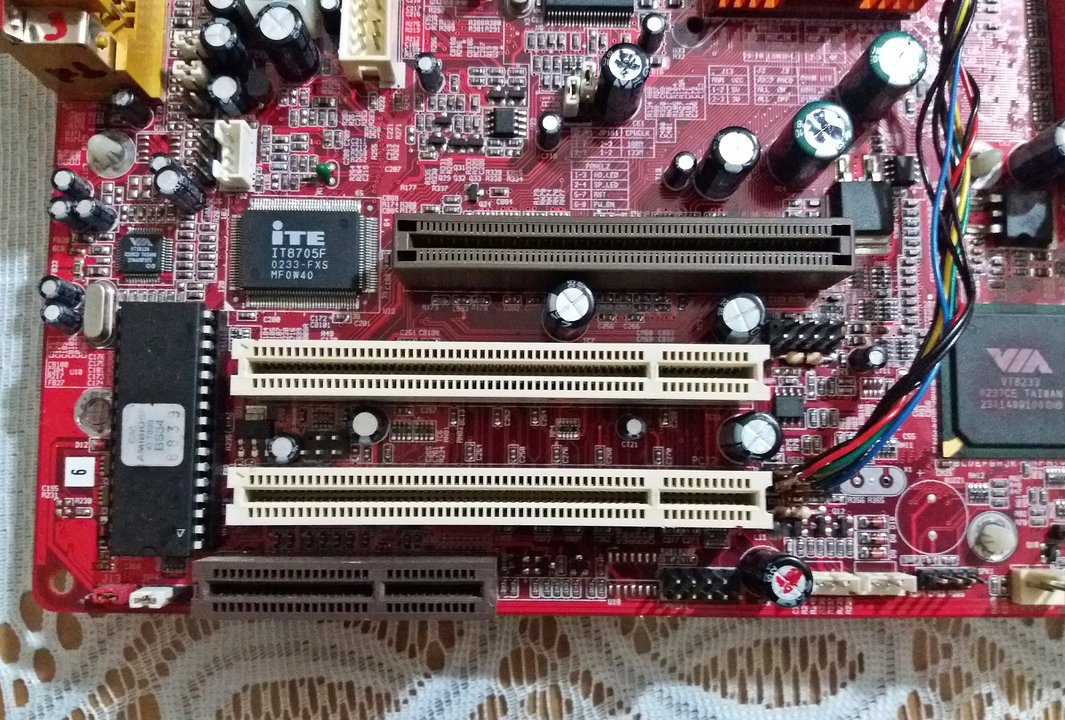
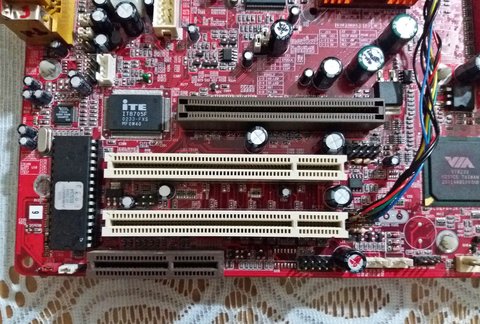
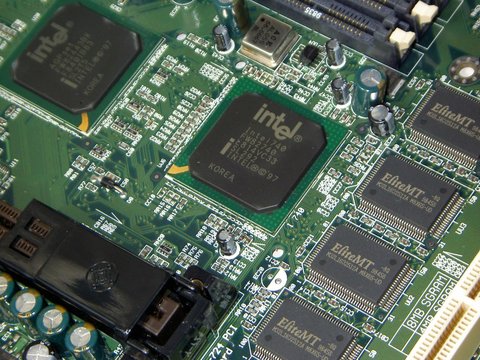
The two long white connectors in the photograph are conventional PCI slots on a later motherboard; the black slot above them is AGP, and the shorter brown connector is CNR. This is a period illustration of the ecosystem PCI enabled, not a photograph of the 1992 specification work.
Original desktop PCI commonly used a shared 32-bit, 33 MHz parallel bus with a theoretical peak near 133 MB/s. Sharing kept systems affordable, yet every device contended for the same pathway, and rising graphics, networking, and storage demands exposed latency, signal-integrity, and bandwidth limits.
The weakness produced PCI’s successor rather than erasing its legacy. PCI Express replaced the parallel shared bus with high-speed serial point-to-point links, while preserving enough of PCI’s configuration and software model to ease the transition for operating systems and device makers.
PCI therefore shows Intel at its best and most strategically astute: establishing a common platform enlarged the whole PC market, including Intel’s own opportunity. It also shows why standards must evolve—the uniform slot that reduced fragmentation in one era became a bottleneck in the next.
Photo: JulianVilla26, CC BY-SA 4.0, via Wikimedia Commons

















changes?
delete this memory?
We detected that you have a Blox in your crypto wallet! We will import the Blox into your account.
Click on done below to complete the import.
Welcome Back!
Sign in to preserve cherished moments
Don't have an account?
Welcome!!
Sign up and start preserving cherished moments
?
?







Choose your payment method
Buy with Metablox Credit
Do you want to mint Blox with Metablox Credit?
Which Crypto would you like to use?
Purchase Confirmed!
Your Blox is being minted on-chain and will appear in your profile shortly.
Log in or sign up to claim your Blox.
How many credits do you want to buy?
$100 USD = 1 Metablox Credit = 1 Blox.
Use Metablox Credit to mint any Blox you want on the map.
 expand_more