


Semiconductor History | Santa Clara, 29 May 2001 - Itanium Tests the Cost of Replacing an Architecture
· 2001-5
Personal memoryBy kevin · · updated · Report an issue














































































Find memories left by people near you.
Distribute Bounty
This will distribute the bounty equally among all qualifying memories. This action cannot be undone.
Cancel Bounty
Are you sure you want to cancel this bounty? The remaining amount will be refunded to your account.
Success!
Operation completed successfully.
Error
Something went wrong.
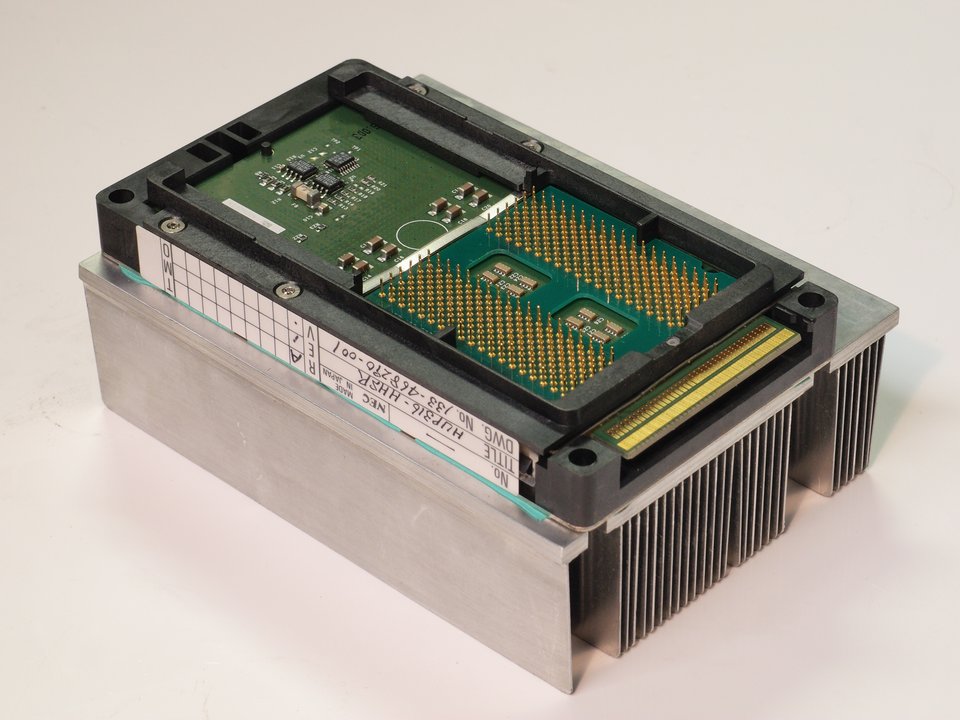
Semiconductor History | Santa Clara, 29 May 2001 - Itanium Tests the Cost of Replacing an Architecture
kevin
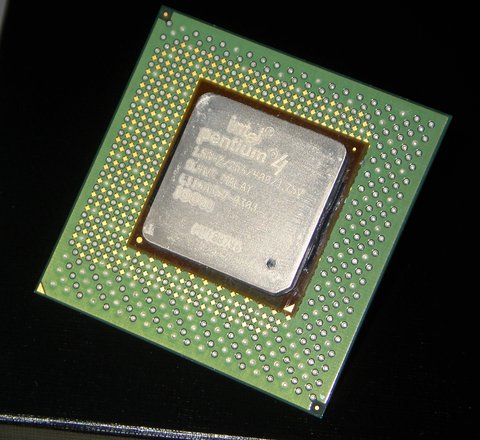
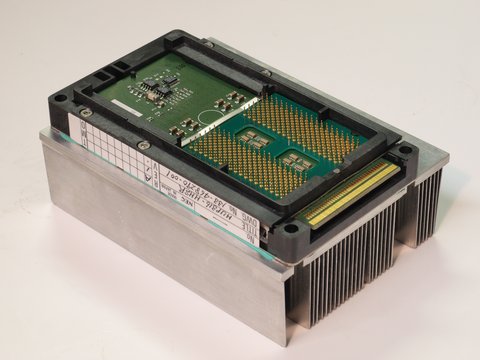
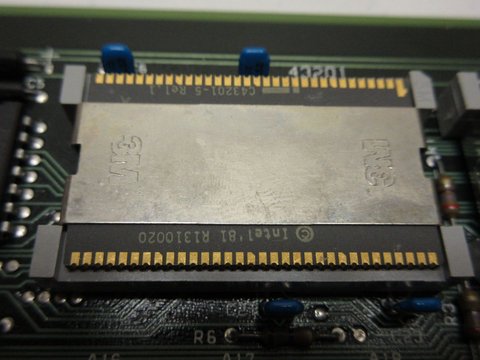
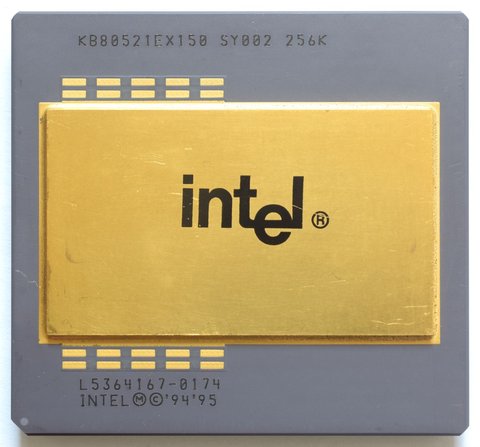
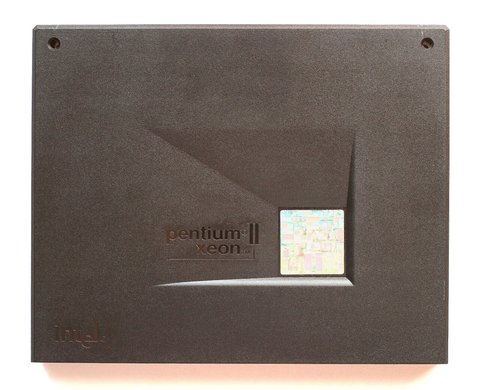
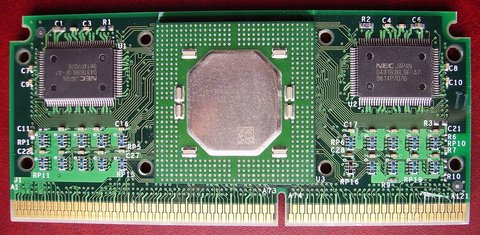
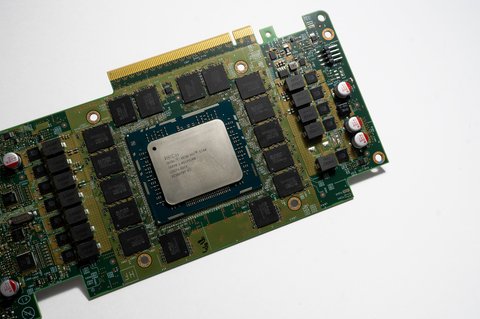
The first-generation Itanium in this photograph looks less like a desktop processor than a piece of industrial equipment: a broad module, dense pin field, and heavy metal heat spreader built for expensive servers.
Intel formally launched Itanium on 29 May 2001 from Santa Clara, with manufacturers preparing systems for June. It was the commercial arrival of IA-64, an architecture Intel and Hewlett-Packard had developed together for high-end computing.
IA-64 asked software to expose instruction-level parallelism explicitly.
Its compilers grouped independent operations so the processor could execute them together, moving part of the scheduling work from complex hardware into software. On suitable workloads, later Itanium systems became serious machines for large databases and mission-critical computing.
The wager was that a new instruction set could gather several proprietary server architectures into one broad ecosystem. It also assumed that customers and software vendors would accept recompilation, tuning, and migration in exchange for the promised future.
That migration proved much harder than designing a processor.
Early hardware and compilers did not deliver the expected advantage across ordinary workloads, while compatibility with existing x86 software was awkward. AMD's competing 64-bit extension preserved the familiar x86 programming model and binary lineage, giving customers a less disruptive route beyond the old 32-bit limits.
Intel eventually adopted the compatible approach in its mainstream processors, while Itanium remained concentrated in a narrower server market. Intel continued supporting the architecture for two decades, but final shipments ended in 2021.
Calling Itanium simply a foolish chip misses both its technical ambition and the durable systems customers built around it. Calling it a success misses the strategic outcome: it did not become the general 64-bit computing platform its sponsors sought.
The lesson is about ecosystems rather than instruction diagrams.
A replacement can be elegant and well funded, yet still lose when the incumbent platform can evolve without making users abandon their software. The module's physical scale suits the story: formidable engineering surrounded by the even larger weight of compatibility.
Photo: htomari, CC BY-SA 2.0, via Wikimedia Commons. The pictured module is a first-generation 733 MHz Itanium.
























changes?
delete this memory?
We detected that you have a Blox in your crypto wallet! We will import the Blox into your account.
Click on done below to complete the import.
Welcome Back!
Sign in to preserve cherished moments
Don't have an account?
Welcome!!
Sign up and start preserving cherished moments
?
?







Choose your payment method
Buy with Metablox Credit
Do you want to mint Blox with Metablox Credit?
Which Crypto would you like to use?
Purchase Confirmed!
Your Blox is being minted on-chain and will appear in your profile shortly.
Log in or sign up to claim your Blox.
How many credits do you want to buy?
$100 USD = 1 Metablox Credit = 1 Blox.
Use Metablox Credit to mint any Blox you want on the map.
 expand_more