


Semiconductor History | Intel Headquarters, 12 February 1998 — The i740 Loses the Graphics Card and Wins the Platform
· 1998-2
Personal memoryBy kevin · · Report an issue









































































Find memories left by people near you.
Distribute Bounty
This will distribute the bounty equally among all qualifying memories. This action cannot be undone.
Cancel Bounty
Are you sure you want to cancel this bounty? The remaining amount will be refunded to your account.
Success!
Operation completed successfully.
Error
Something went wrong.
Semiconductor History | Intel Headquarters, 12 February 1998 — The i740 Loses the Graphics Card and Wins the Platform
kevin
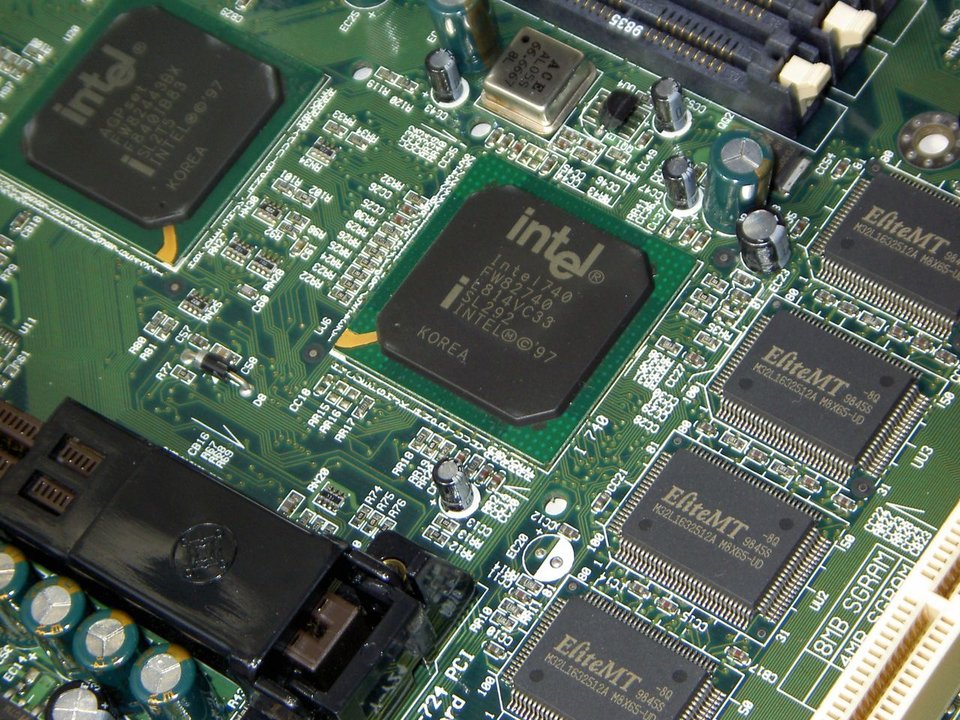
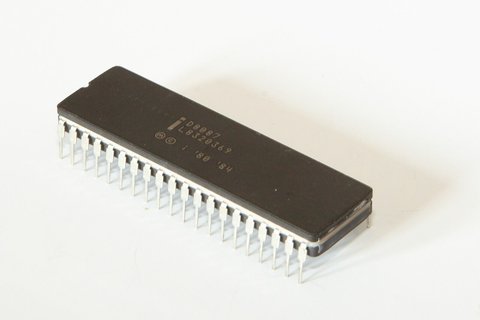
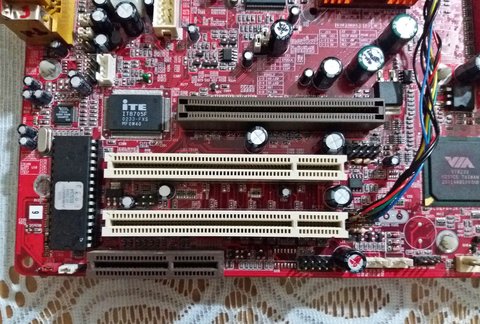
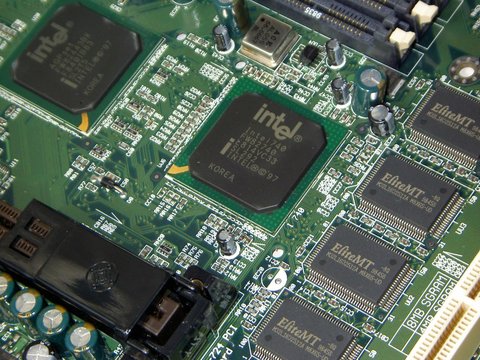
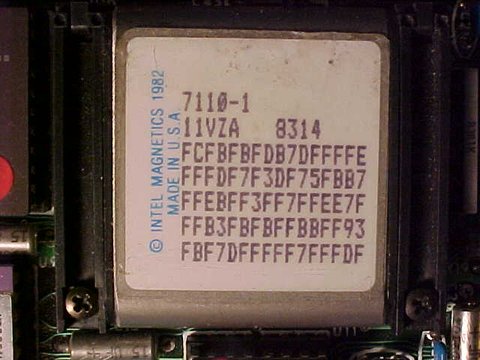
The Intel i740 at the center of this EPoX motherboard is the rare discrete graphics chip whose larger legacy came from failing to remain a discrete graphics product.
Intel announced the i740 on 12 February 1998 at $34.75 in quantities of 10,000. Co-developed with Chips & Technologies and Real3D, the chip combined 2D, video, and 3D acceleration and was designed around the Accelerated Graphics Port that Intel was pushing with the Pentium II platform.
Its best idea was also its central constraint.
The i740 kept frame and depth buffers in a small amount of local memory but fetched textures through AGP from the PC's main memory. That Direct Memory Execution approach could reduce card cost and demonstrate why buyers should adopt Intel's new AGP chipsets.
Contemporary analysis praised its visual quality and mainstream ambition.
The tile-oriented renderer improved memory locality, and the design supported useful features such as bilinear filtering, per-pixel mip-map selection, 2D acceleration, and video playback. Intel later sold its own Express 3D cards in 2- and 4-megabyte versions for $124 and $149.
Performance did not match the launch rhetoric.
Main memory bandwidth was shared with the processor, and the i740 could not store textures in local memory. Microprocessor Report found it slower than Nvidia's RIVA 128 on nearly every mutually supported scene, while newer chips were already adding true trilinear filtering, more local memory, and higher fill rates.
The discrete product disappeared quickly in a market led by 3dfx, Nvidia, and ATI.
Yet Intel did not abandon the underlying strategy. Graphics technology and the lesson that adequate visuals could be bundled with the platform moved into Intel chipsets, where low cost and enormous PC volume mattered more than winning enthusiast benchmarks.
That makes the i740 both a loss and a rehearsal.
The good was affordable, competent graphics that helped establish AGP and gave Intel real 3D engineering experience. The bad was a design tuned too tightly to Intel's preferred system architecture, with performance and features that aged almost immediately in a brutally fast market.
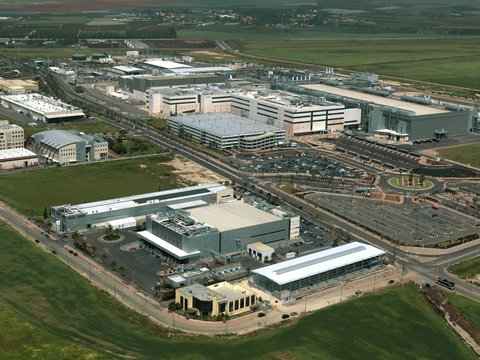
The pin marks Intel's headquarters, the Santa Clara dateline of the launch announcement, rather than a documented launch room. The Intel Museum is the appropriate public visitor setting at the campus.
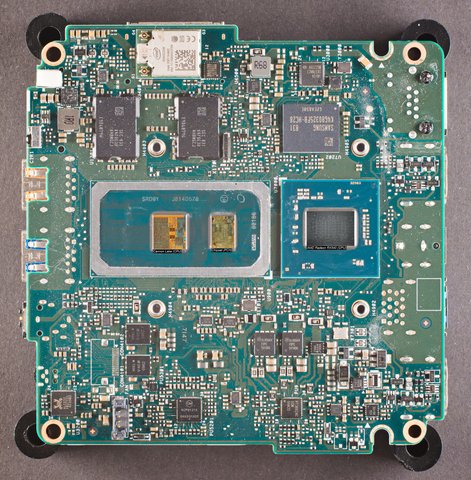
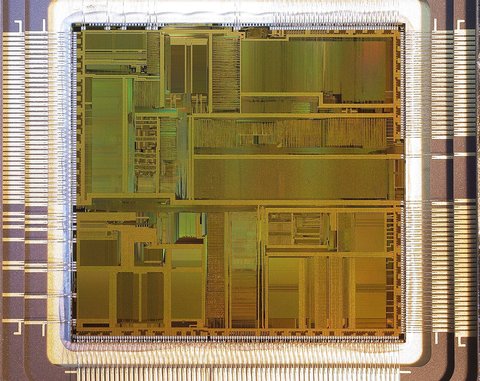
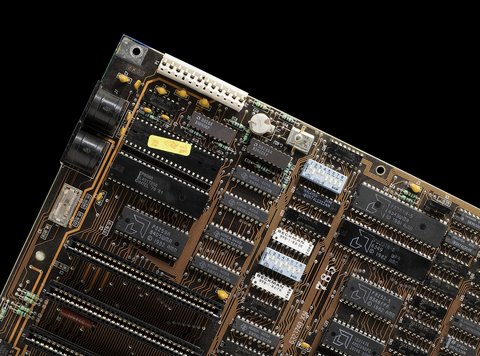
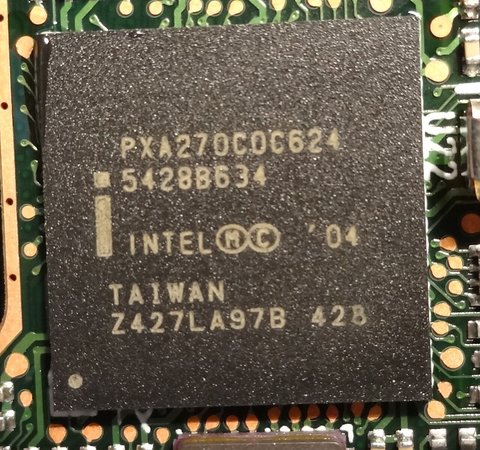
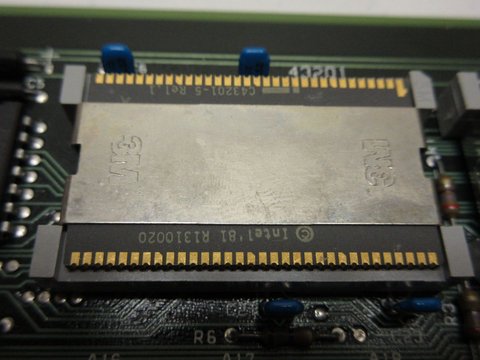
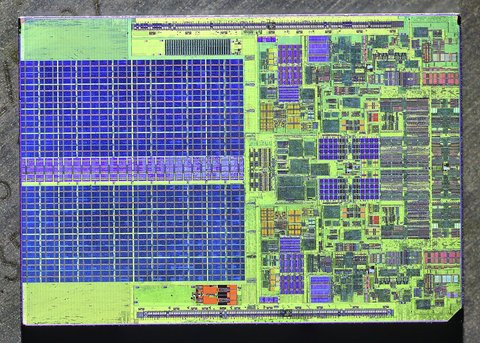
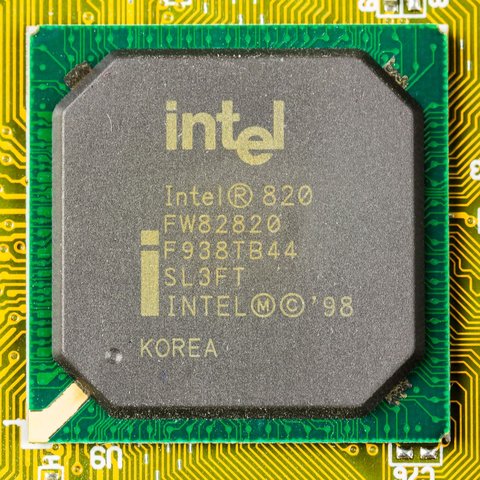
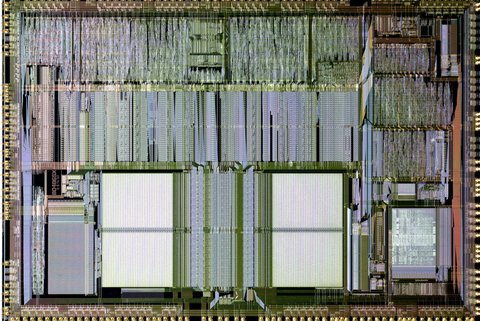
The photograph, made in 2008, shows an exact Intel FW82740 chip used as onboard graphics on an EPoX EP-BXT motherboard.
Photo: Futase_tdkr, public domain, via Wikimedia Commons.
















changes?
delete this memory?
We detected that you have a Blox in your crypto wallet! We will import the Blox into your account.
Click on done below to complete the import.
Welcome Back!
Sign in to preserve cherished moments
Don't have an account?
Welcome!!
Sign up and start preserving cherished moments
?
?






Choose your payment method
Buy with Metablox Credit
Do you want to mint Blox with Metablox Credit?
Which Crypto would you like to use?
Purchase Confirmed!
Your Blox is being minted on-chain and will appear in your profile shortly.
Log in or sign up to claim your Blox.
How many credits do you want to buy?
$100 USD = 1 Metablox Credit = 1 Blox.
Use Metablox Credit to mint any Blox you want on the map.
 expand_more