


Semiconductor History | Santa Clara, 7 May 2004 - Intel Stops Chasing Clock Speed
· 2004-5
Personal memoryBy kevin · · updated · Report an issue












































































Find memories left by people near you.
Distribute Bounty
This will distribute the bounty equally among all qualifying memories. This action cannot be undone.
Cancel Bounty
Are you sure you want to cancel this bounty? The remaining amount will be refunded to your account.
Success!
Operation completed successfully.
Error
Something went wrong.
Semiconductor History | Santa Clara, 7 May 2004 - Intel Stops Chasing Clock Speed
kevin
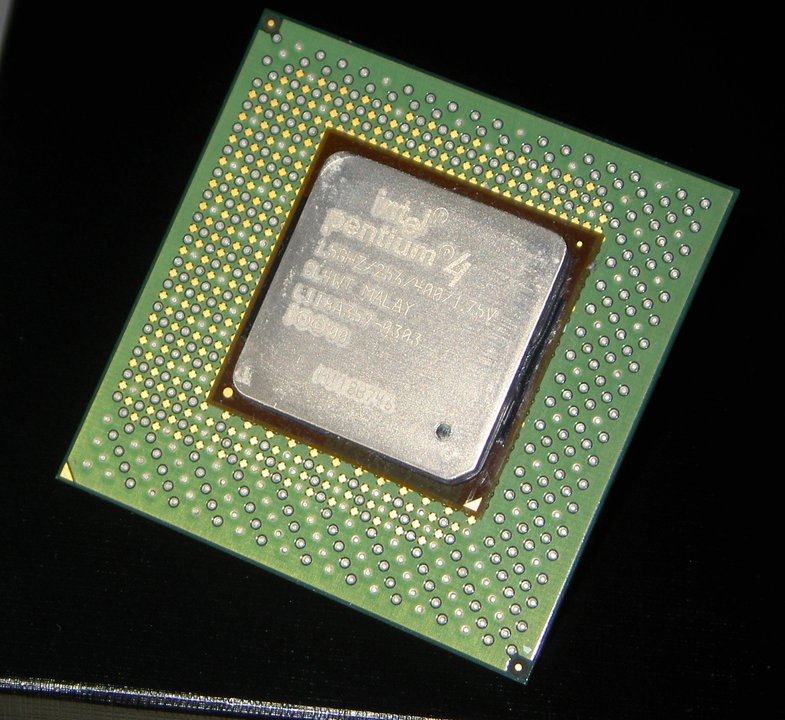
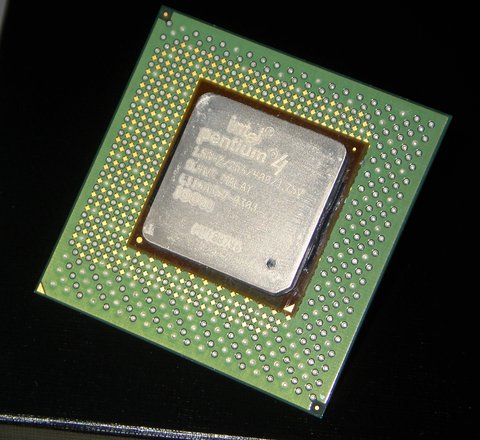
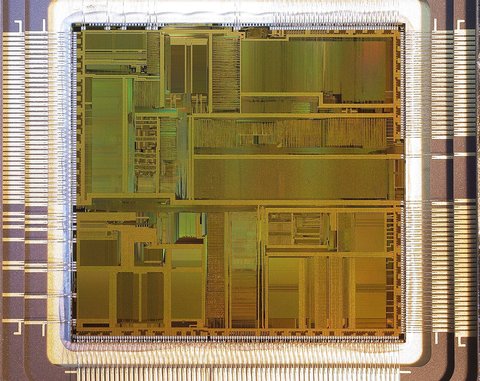
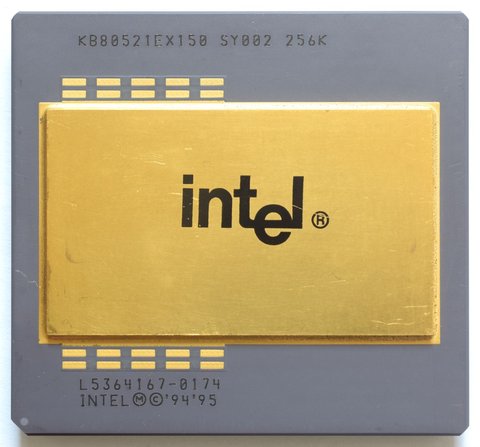
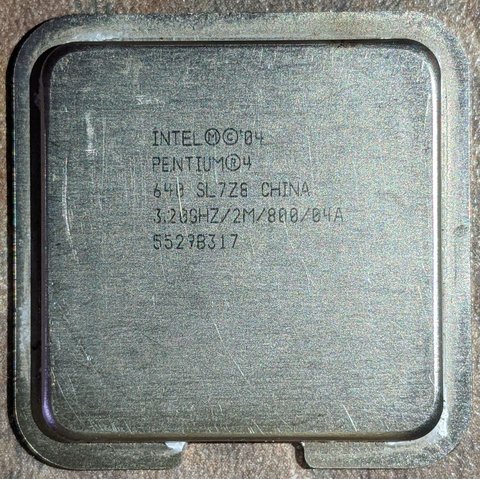
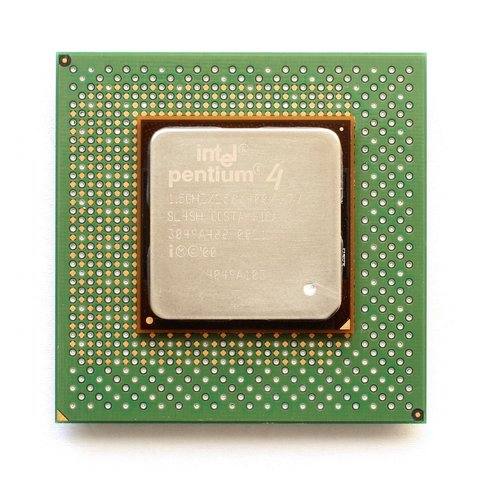
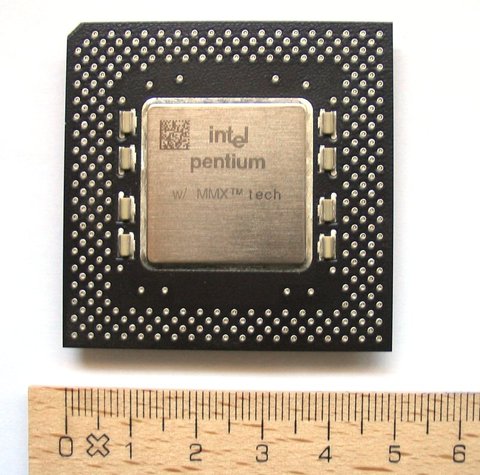
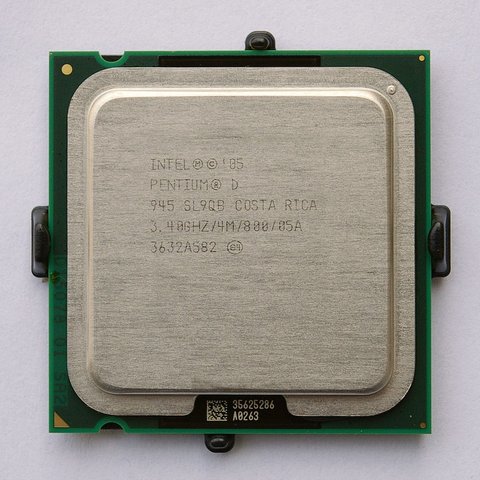
The lettering on this processor reads "1.5 GHz/256/400," identifying an early Pentium 4 built around Intel's Willamette design and Socket 423 package.
Pentium 4 introduced the NetBurst architecture in 2000 with a deep pipeline designed to reach increasingly high clock frequencies. Frequency was easy to advertise, and Intel expected later generations to carry the strategy much further.
By 2004, the physical bill had arrived.
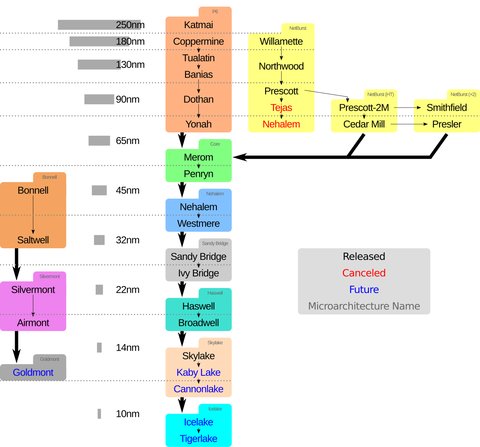
Long pipelines made each wrong branch more expensive, while higher frequency and rising leakage turned power consumption and heat into limits that fabrication improvements could not erase on schedule. Prescott, the 90-nanometer Pentium 4 generation Intel released in February, offered new features and higher speeds but made the thermal problem impossible to treat as a temporary inconvenience.
On 7 May, Intel confirmed that it had cancelled Tejas and Jayhawk, the planned successors for desktops and servers. Contemporary reports recorded a new emphasis on processors with two cores instead of one core pushed to ever higher frequency.
This was a public reversal of a product story Intel had spent years teaching customers to understand.
The cancellation was costly because projects absorb engineering time long before they ship. It also conceded that the headline number printed on the box was no longer a reliable path to useful performance.
The good decision was stopping.
Intel redirected resources toward multicore products and then toward the more efficient Core architecture, drawing on work that had evolved through its mobile-processor teams. Performance would increasingly come from doing more work per clock, using several cores, and managing power rather than treating gigahertz as the single scoreboard.
The transition created new difficulties for software developers, because extra cores help only when work can be divided safely. Still, it aligned processor design with the thermal reality of computers from laptops to data centers.
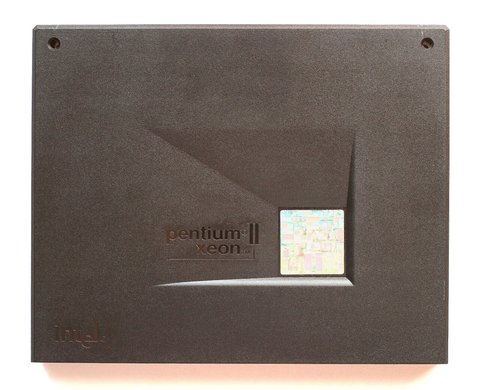
The photographed Willamette is not Tejas, which never became a commercial package. It is the beginning of the visible arc: a 1.5 GHz artifact from the architecture whose frequency ambitions eventually forced Intel to change direction.
Photo: Futase_tdkr, public domain, via Wikimedia Commons.




















changes?
delete this memory?
We detected that you have a Blox in your crypto wallet! We will import the Blox into your account.
Click on done below to complete the import.
Welcome Back!
Sign in to preserve cherished moments
Don't have an account?
Welcome!!
Sign up and start preserving cherished moments
?
?







Choose your payment method
Buy with Metablox Credit
Do you want to mint Blox with Metablox Credit?
Which Crypto would you like to use?
Purchase Confirmed!
Your Blox is being minted on-chain and will appear in your profile shortly.
Log in or sign up to claim your Blox.
How many credits do you want to buy?
$100 USD = 1 Metablox Credit = 1 Blox.
Use Metablox Credit to mint any Blox you want on the map.
 expand_more