


Semiconductor History | McCormick Place, 10 April 1989 — Intel Puts the Cache and Math Unit on the 486
· 1989-4
Personal memoryBy kevin · · Report an issue














































































Find memories left by people near you.
Distribute Bounty
This will distribute the bounty equally among all qualifying memories. This action cannot be undone.
Cancel Bounty
Are you sure you want to cancel this bounty? The remaining amount will be refunded to your account.
Success!
Operation completed successfully.
Error
Something went wrong.
Semiconductor History | McCormick Place, 10 April 1989 — Intel Puts the Cache and Math Unit on the 486
kevin
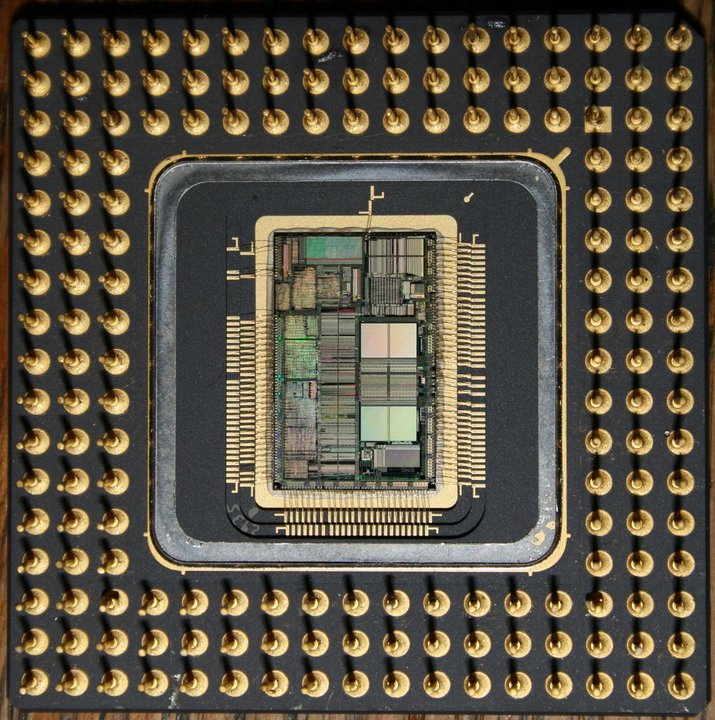
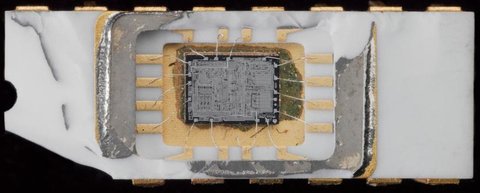
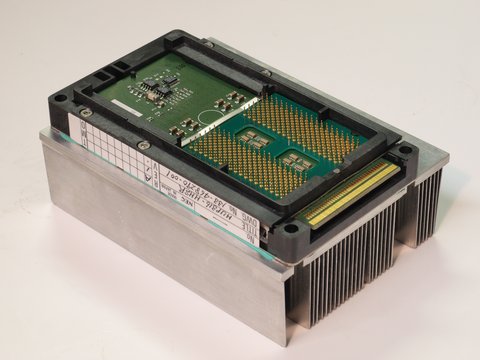
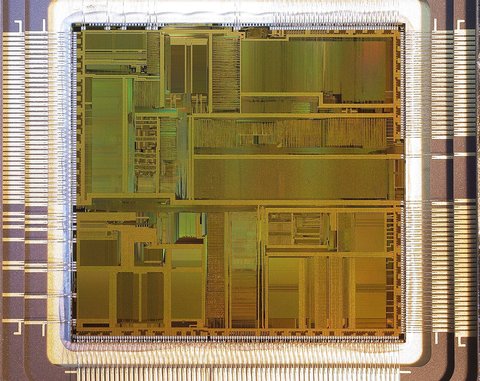
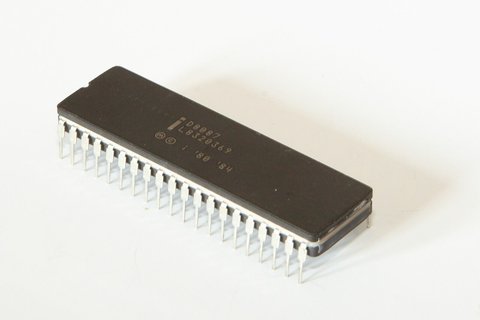
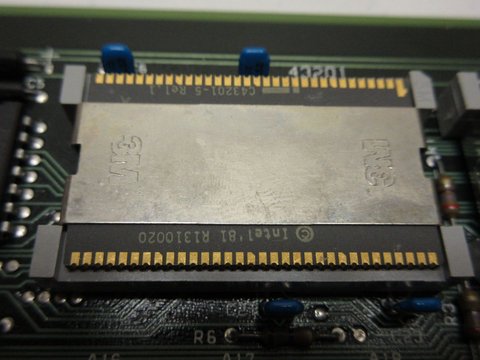
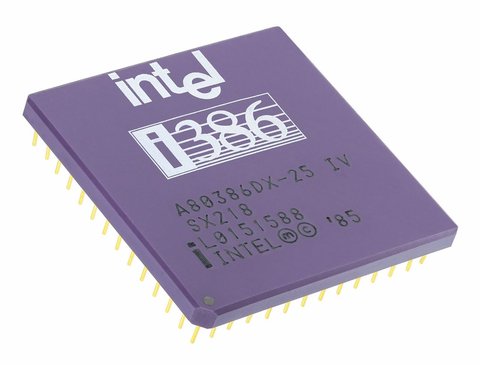
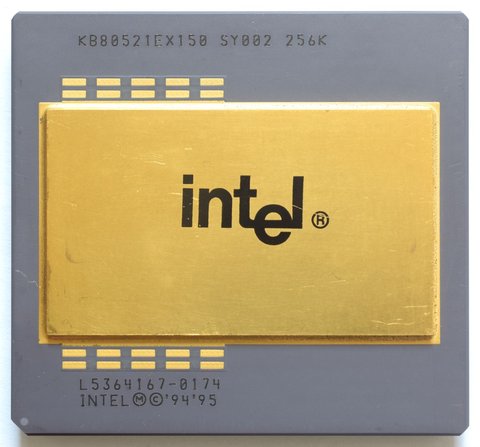
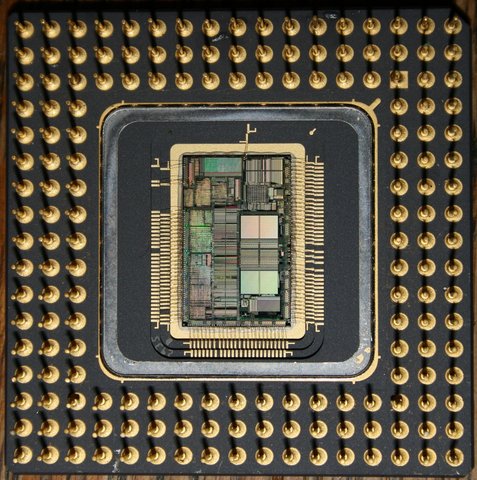
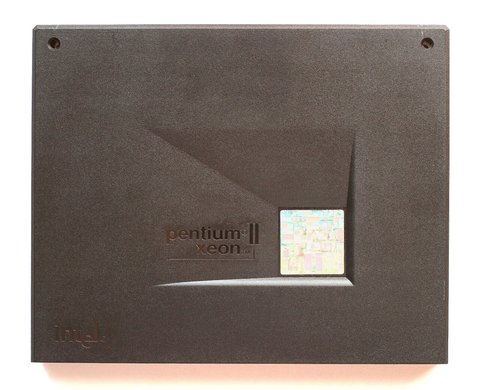
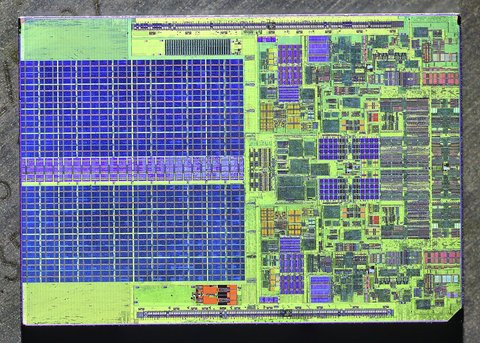
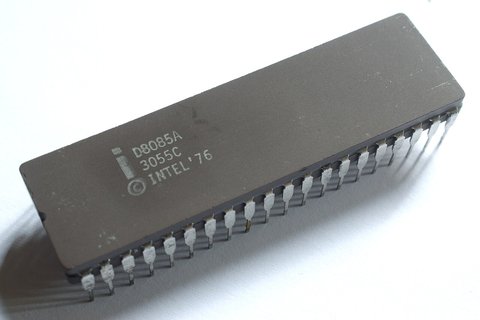
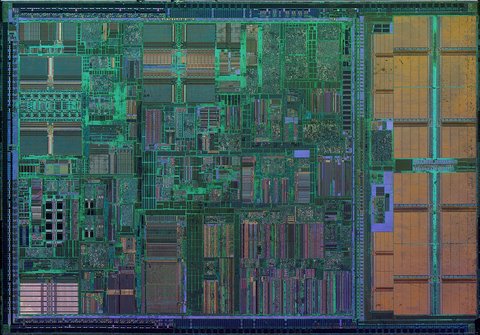
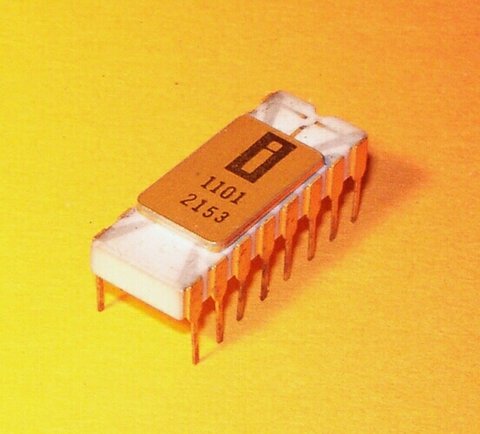
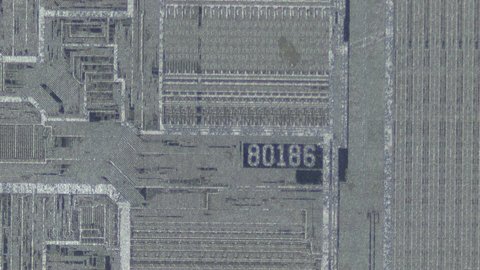
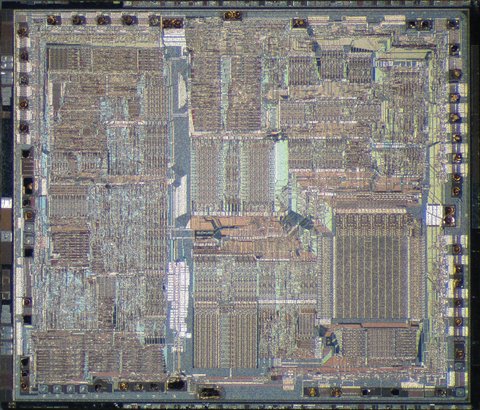
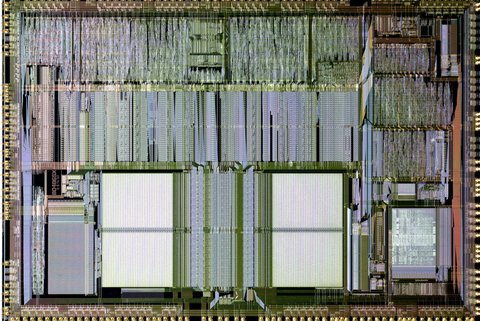
With its lid removed, this 80486 turns a black square package into a visible machine: a rectangular silicon die, fine bond wires, and 168 gold pins surrounding it. Roughly 1.2 million transistors made the chip look less dramatic from outside precisely because so much computer hardware had moved inside.
Intel introduced the 486 at Spring COMDEX in Chicago on 10 April 1989. Contemporary reports placed the announcement at McCormick Place, where computer makers gathered to show the systems that would carry the new processor.
The engineering step was integration.
The 32-bit 386 architecture remained software-compatible, but the 486 added an eight-kilobyte on-chip cache, a pipelined execution unit, and—on the original DX model—the floating-point hardware that earlier systems bought as a separate 80387 coprocessor. Intel’s own guide lists a one-micron process and 1.2 million transistors for the family.
Bringing those functions onto one die reduced the delays and board complexity of passing work among separate components. At the same clock rate, a 486 system could complete ordinary instructions much faster than a 386 while continuing to run the software base that PC buyers already owned.
That compatibility was the good and the strategic advantage.
Computer manufacturers could build faster workstations, servers, and premium PCs without asking customers to abandon DOS, Unix applications, or the expanding world of x86 development tools. Intel improved the machine behind the boundary while keeping the boundary stable.
The cost was literal and structural.
The launch chip was priced for expensive systems, not the mass-market desktop, and integrating cache and floating-point circuitry increased manufacturing risk on a large die. Intel later sold lower-cost SX versions with the math unit disabled, turning a technical capability into a product-segmentation line that could be confusing for buyers.
The 486 also strengthened Intel’s control over the PC’s most valuable component. Compatibility encouraged the industry to remain on x86, while the difficulty of reproducing an increasingly complex processor raised the stakes for AMD and other rivals trying to supply alternatives.
The 486 therefore marks a mature kind of progress: fewer chips on the board, more work hidden inside the processor, and stronger continuity for software. It also shows how integration can concentrate both engineering value and market power in the same package.
The pin marks McCormick Place, 2301 South Martin Luther King Drive, where Spring COMDEX ran from 10 to 13 April 1989. The convention complex is public during scheduled events; access varies by hall and event.
Photo: Thomy pc, public domain, via Wikimedia Commons.



















changes?
delete this memory?
We detected that you have a Blox in your crypto wallet! We will import the Blox into your account.
Click on done below to complete the import.
Welcome Back!
Sign in to preserve cherished moments
Don't have an account?
Welcome!!
Sign up and start preserving cherished moments
?
?







Choose your payment method
Buy with Metablox Credit
Do you want to mint Blox with Metablox Credit?
Which Crypto would you like to use?
Purchase Confirmed!
Your Blox is being minted on-chain and will appear in your profile shortly.
Log in or sign up to claim your Blox.
How many credits do you want to buy?
$100 USD = 1 Metablox Credit = 1 Blox.
Use Metablox Credit to mint any Blox you want on the map.
 expand_more