


Semiconductor History | Intel Headquarters, 7 May 1997 — Pentium II Puts P6 in a Cartridge
· 1997-5
Personal memoryBy kevin · · Report an issue










































































Find memories left by people near you.
Distribute Bounty
This will distribute the bounty equally among all qualifying memories. This action cannot be undone.
Cancel Bounty
Are you sure you want to cancel this bounty? The remaining amount will be refunded to your account.
Success!
Operation completed successfully.
Error
Something went wrong.
Semiconductor History | Intel Headquarters, 7 May 1997 — Pentium II Puts P6 in a Cartridge
kevin
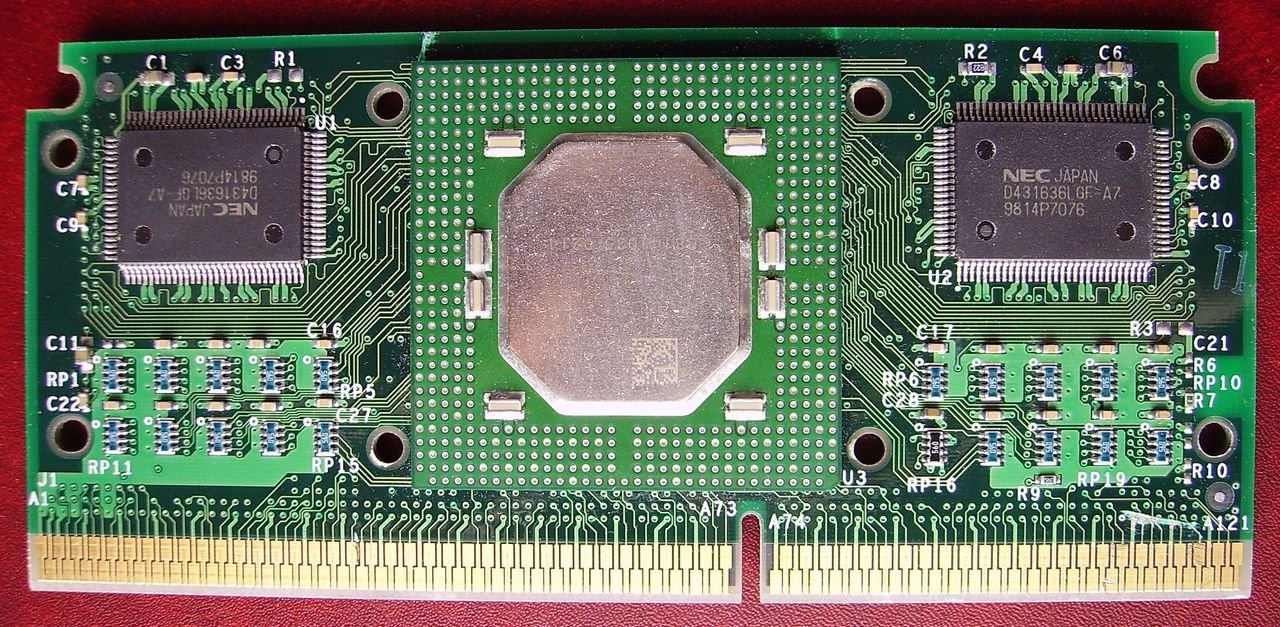
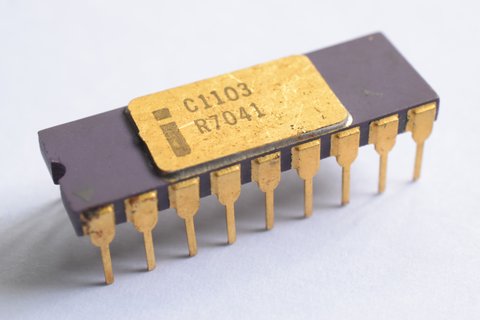
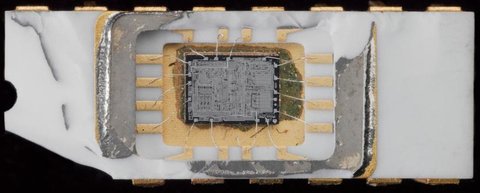
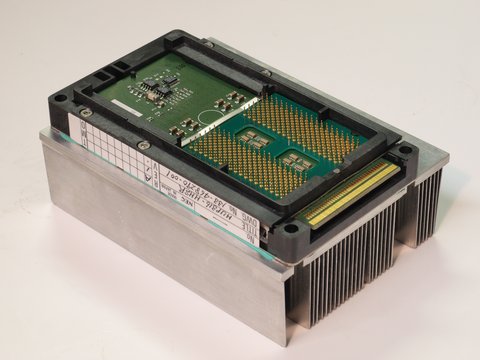
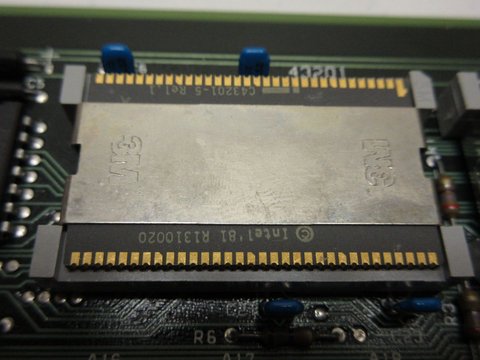
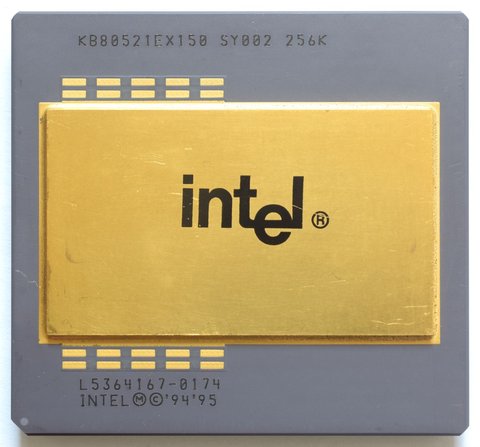
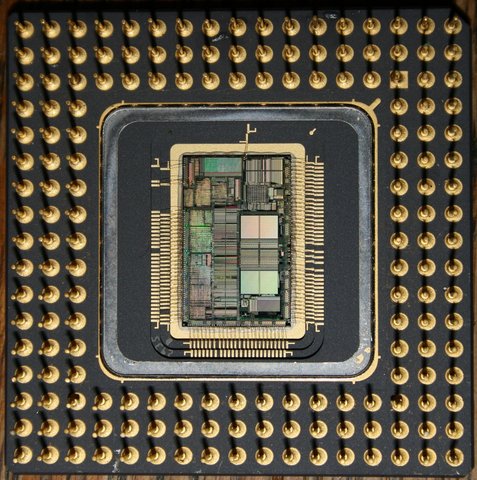
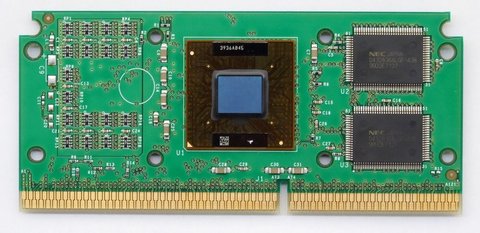
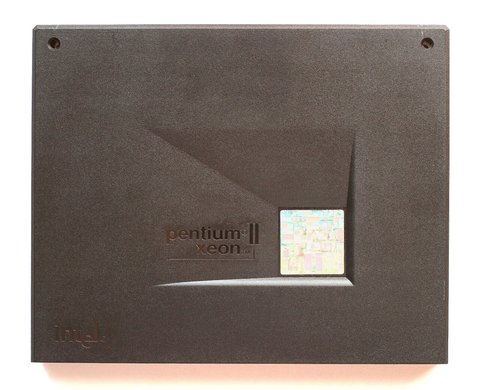
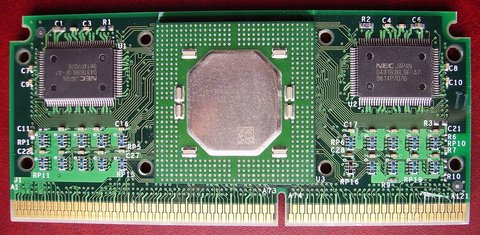
This opened Pentium II module shows why Intel's 1997 flagship looked less like a conventional chip than a small circuit board disguised as a cartridge.
Intel introduced the Pentium II on 7 May 1997 at 233 and 266 megahertz, with a 300-megahertz workstation version planned for the third quarter. It combined the Pentium Pro's P6 execution engine with MMX instructions and larger first-level caches, improving performance on the mix of 32-bit and older 16-bit software then common in business PCs.
The core was strong; the package was the bargain.
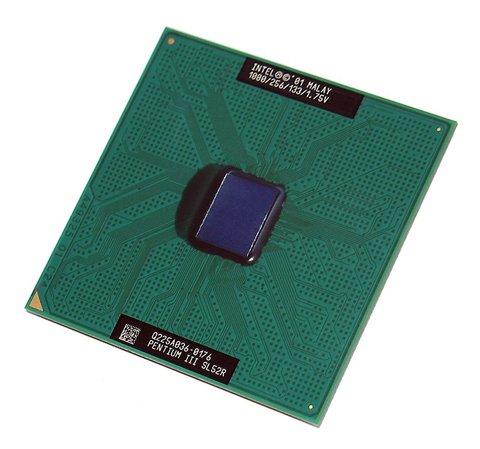
Pentium Pro placed processor and cache die together in an expensive ceramic package. Pentium II moved 512 kilobytes of level-two cache onto a small board beside the CPU, used industry-sourced SRAM, and enclosed the assembly in Intel's Single Edge Contact cartridge.
That choice made advanced P6 processors practical at mainstream volumes and prices.
The first Klamath chips contained 7.5 million transistors on a 0.35-micron process. Contemporary testing found the 233-megahertz model faster than a 200-megahertz Pentium Pro in Windows NT and substantially faster in Windows 95, while MMX accelerated selected media workloads.
The cartridge also advertised its compromises.
Its external cache commonly ran at half the processor clock, slower than Pentium Pro's closely coupled cache. The plastic-and-metal module was bulky, and its new Slot 1 connector was incompatible with the vast installed base of Socket 7 motherboards, forcing a platform replacement rather than a simple CPU upgrade.
Pricing reinforced the lock-in.
Intel listed the 233- and 266-megahertz parts at $636 and $775 in thousand-unit quantities, while the scarce 300-megahertz version cost $1,981. Buyers received leading integer performance, but Intel also used a proprietary mechanical and electrical transition to control the high end of the PC platform.
Pentium II nevertheless became the bridge that Pentium Pro never could.
It carried P6 into consumer PCs and became the parent platform for both budget Celerons and server Xeons. The good was a capable architecture made widely manufacturable; the bad was a conspicuous cartridge, slower cache, high initial prices, and a mandatory new motherboard.
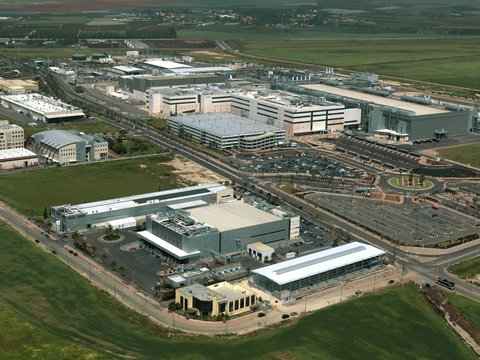
The pin marks Intel's Santa Clara headquarters as the corporate anchor because the surviving launch release is datelined New York without a reliable room-level venue. The adjacent Intel Museum is open to visitors on its published schedule; the working campus is not a general-access attraction.
The photograph shows an original 233-megahertz Klamath module with its thermal plate removed, exposing the CPU and two cache chips.
Photo: Jean-Pierre, CC BY-SA 2.0, via Wikimedia Commons.

















changes?
delete this memory?
We detected that you have a Blox in your crypto wallet! We will import the Blox into your account.
Click on done below to complete the import.
Welcome Back!
Sign in to preserve cherished moments
Don't have an account?
Welcome!!
Sign up and start preserving cherished moments
?
?






Choose your payment method
Buy with Metablox Credit
Do you want to mint Blox with Metablox Credit?
Which Crypto would you like to use?
Purchase Confirmed!
Your Blox is being minted on-chain and will appear in your profile shortly.
Log in or sign up to claim your Blox.
How many credits do you want to buy?
$100 USD = 1 Metablox Credit = 1 Blox.
Use Metablox Credit to mint any Blox you want on the map.
 expand_more