

Semiconductor History | Intel Headquarters, 1983 — The 82586 Gives Ethernet Its Own Processor
· 1983
Personal memoryBy kevin · · Report an issue





































































Find memories left by people near you.
Distribute Bounty
This will distribute the bounty equally among all qualifying memories. This action cannot be undone.
Cancel Bounty
Are you sure you want to cancel this bounty? The remaining amount will be refunded to your account.
Success!
Operation completed successfully.
Error
Something went wrong.
Semiconductor History | Intel Headquarters, 1983 — The 82586 Gives Ethernet Its Own Processor
kevin
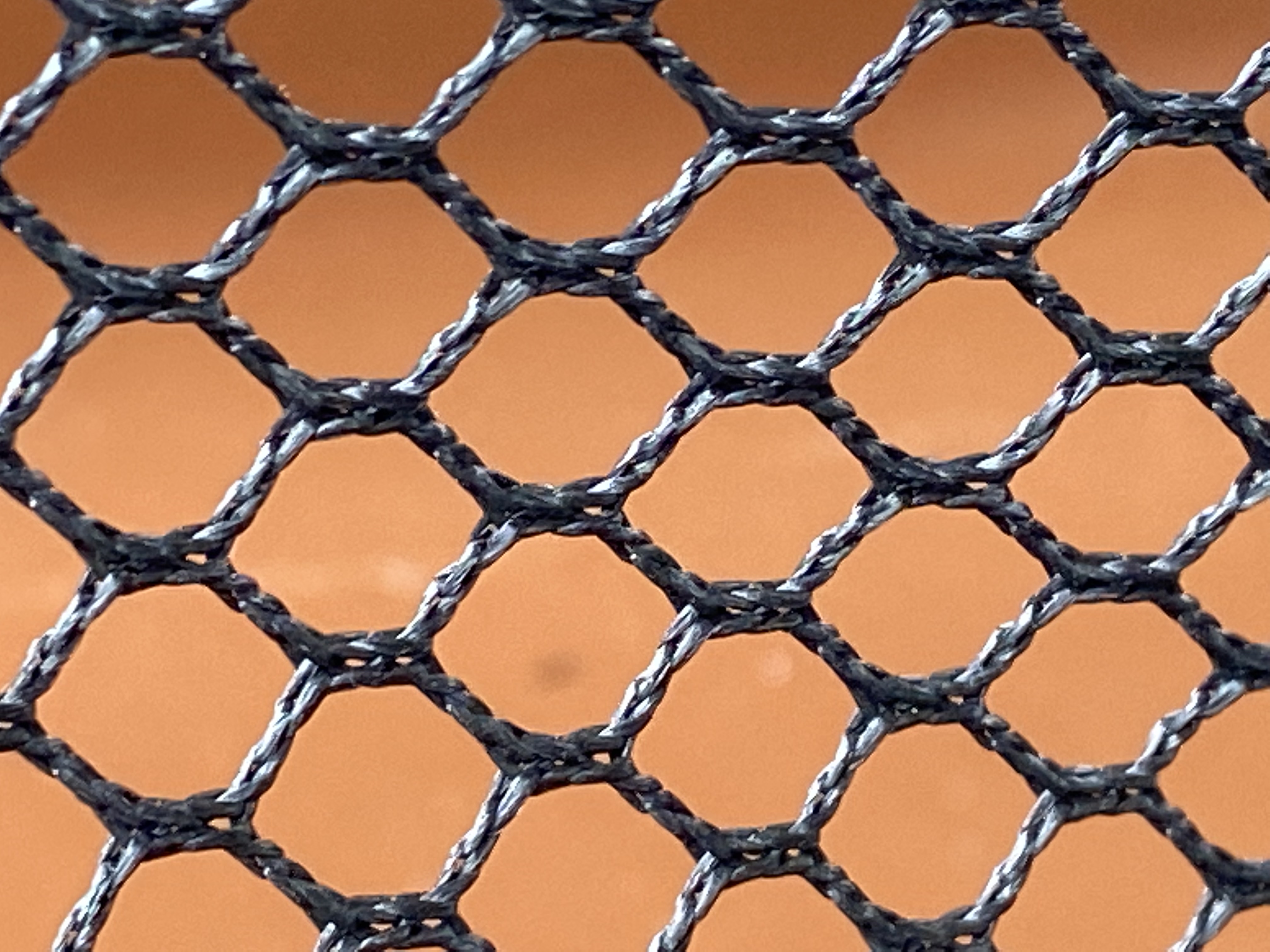
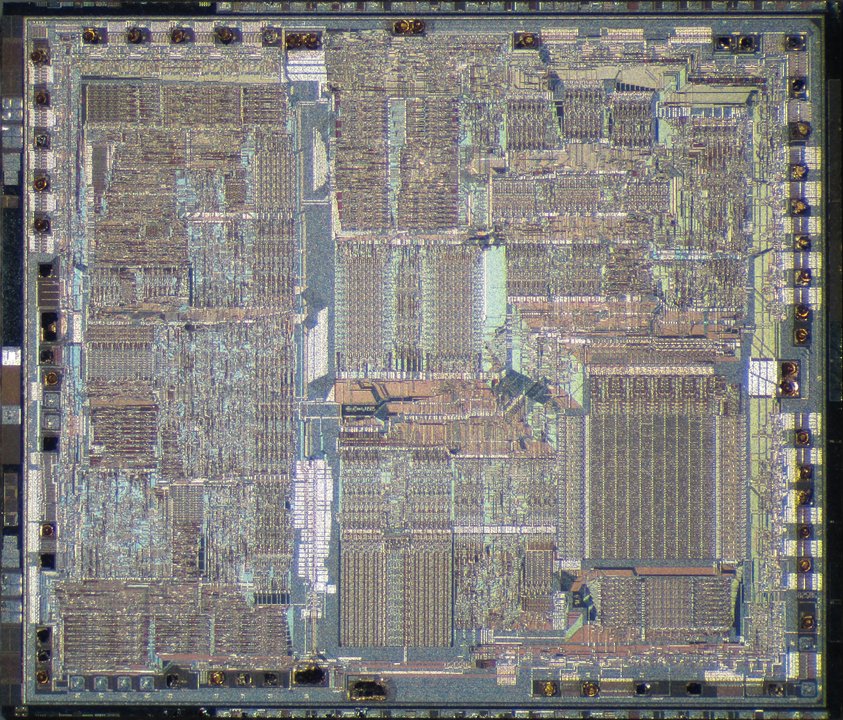
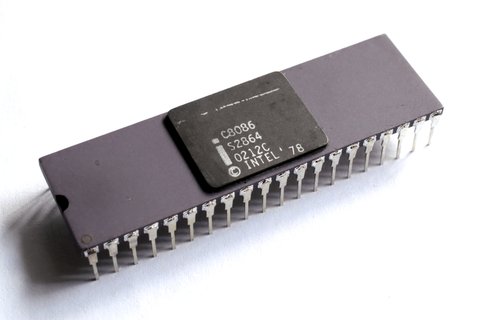
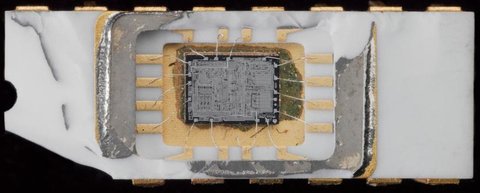
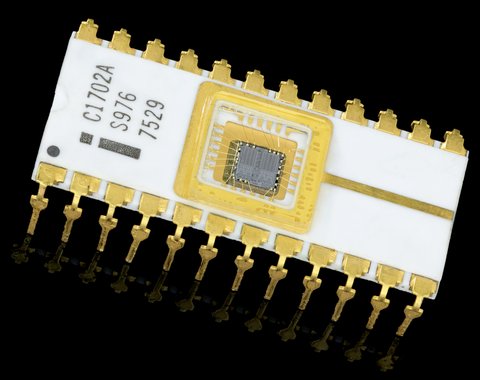
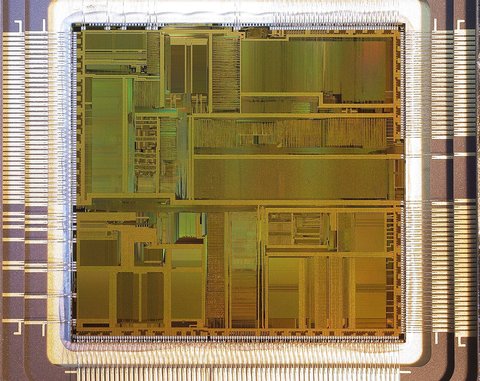
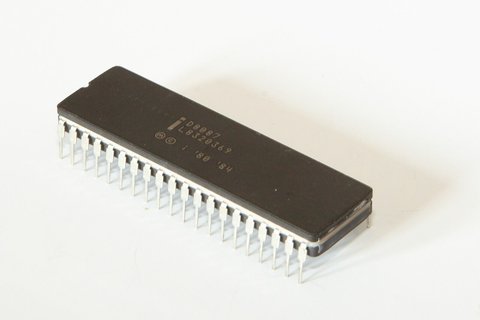
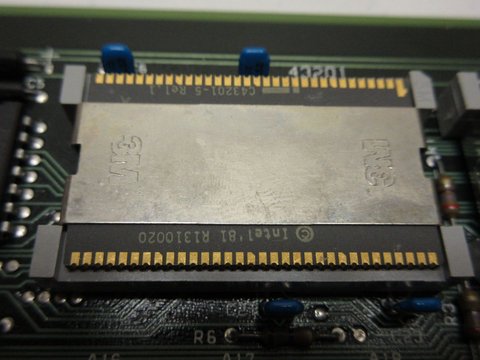
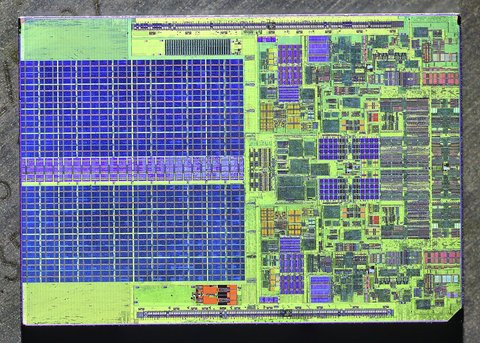
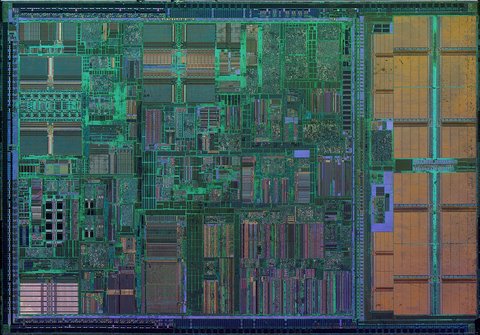
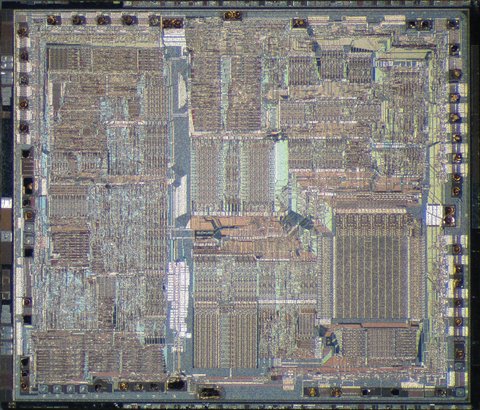
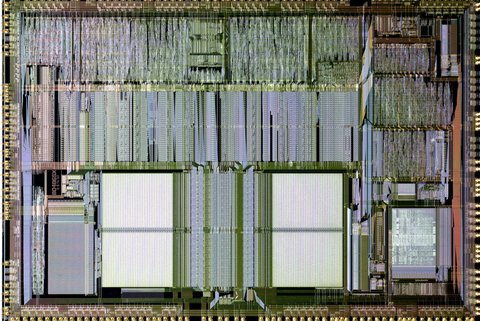
This long rectangular die is Intel's 82586, built when connecting a computer to Ethernet still demanded a small system rather than a socket on every motherboard.
Intel's surviving chronologies split the milestone across 1982 and 1983. A company product timeline assigns the 82586 to 1982, while Intel's thirty-fifth-anniversary history places the announcement of its first local-area-network controller in 1983; this memory uses the documented public-product year and states the ambiguity rather than inventing a day.
The chip was an IEEE 802.3 Ethernet LAN coprocessor.
It handled carrier-sense multiple access with collision detection, frame transmission and reception, error counts, diagnostics, and buffer management. Bus-master direct memory access let it move packet data between shared memory and the network without making the host processor supervise every byte.
That offload mattered at 10 megabits per second.
Intel designed the 82586 to work with 8- and 16-bit processors and gave it a high-level command interface. A host prepared command and buffer structures in memory, signaled the coprocessor, and returned to its own work while the 82586 managed the link.
The device was not yet Ethernet reduced to one self-contained chip.
It still needed a serial-interface component such as Intel's 82501, a physical transceiver, shared memory, firmware, and a driver that understood its linked command and receive structures. Intel's 1983 iSBC 186/51 communicating computer combined an 80186, operating-system firmware, the 82586, the 82501, memory, and network software on a 6.75-by-12-inch Multibus board.
That board reveals both the achievement and the remaining distance.
The good was moving real network work away from the main CPU and into programmable silicon just as Ethernet became an IEEE standard. The bad was complexity: designers still bought a multi-chip subsystem, learned an elaborate memory interface, and supplied the software that made the controller useful.
Later controllers absorbed the serial interface, physical layer, and bus connection into far smaller packages, but the 82586 established a pattern Intel would follow through EtherExpress adapters and decades of PC and server networking.
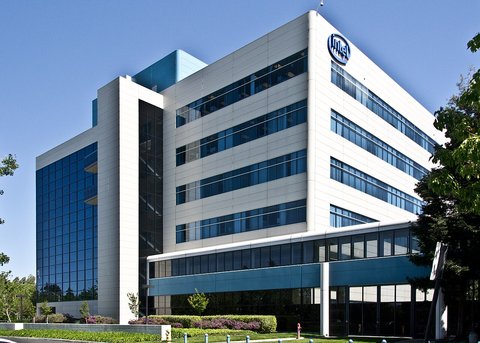
The pin marks Intel headquarters as the corporate anchor, not a claimed announcement stage. The die photograph was visually checked against its Commons description and category as an Intel N82586 LAN coprocessor.
Photo: Pauli Rautakorpi, CC BY 3.0, via Wikimedia Commons.










changes?
delete this memory?
We detected that you have a Blox in your crypto wallet! We will import the Blox into your account.
Click on done below to complete the import.
Welcome Back!
Sign in to preserve cherished moments
Don't have an account?
Welcome!!
Sign up and start preserving cherished moments
?
?






Choose your payment method
Buy with Metablox Credit
Do you want to mint Blox with Metablox Credit?
Which Crypto would you like to use?
Purchase Confirmed!
Your Blox is being minted on-chain and will appear in your profile shortly.
Log in or sign up to claim your Blox.
How many credits do you want to buy?
$100 USD = 1 Metablox Credit = 1 Blox.
Use Metablox Credit to mint any Blox you want on the map.
 expand_more