


Semiconductor History | Intel Headquarters, 8 September 2008 — The X25-M Makes Flash Storage Feel Ready
· 2008-9
Personal memoryBy kevin · · Report an issue














































































Find memories left by people near you.
Distribute Bounty
This will distribute the bounty equally among all qualifying memories. This action cannot be undone.
Cancel Bounty
Are you sure you want to cancel this bounty? The remaining amount will be refunded to your account.
Success!
Operation completed successfully.
Error
Something went wrong.
Semiconductor History | Intel Headquarters, 8 September 2008 — The X25-M Makes Flash Storage Feel Ready
kevin
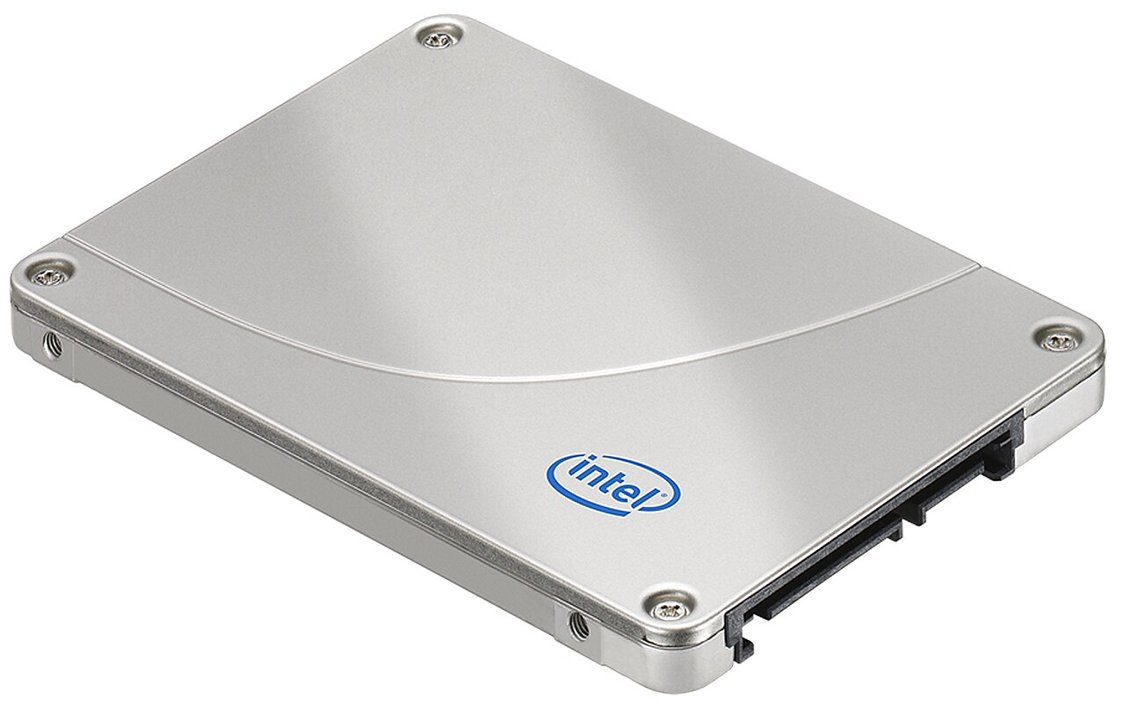
On 8 September 2008, Intel introduced the 80-gigabyte X25-M solid-state drive for notebooks and desktops. The Santa Clara headquarters pin marks the corporate launch of a storage product whose importance lay less in raw capacity than in making flash behave like a trustworthy system drive.
The 2.5-inch X25-M used multilevel-cell NAND flash, a ten-channel internal architecture, and Intel-developed controller firmware. Intel specified sequential reads up to 250 megabytes per second, writes up to 70 megabytes per second, and read latency of 85 microseconds.
The good was responsiveness and consistency. Independent launch-day testing found that the X25-M combined fast reads with unusually strong random-access behavior, avoiding the pauses that had damaged confidence in several cheaper early MLC drives.
With no spinning platters or moving heads, it also resisted shock, used less power in many workloads, and made a notebook feel faster in ways that peak transfer rates alone did not capture. Intel’s reputation in controllers and validation helped move the SSD from an exotic upgrade toward a credible replacement for a hard disk.
The bad was the price-capacity bargain. Intel listed the 80-gigabyte drive at $595 in quantities up to one thousand, while magnetic disks offered many times the space for far less money; the product was persuasive technology before it was mass-market storage.
Flash also required careful wear leveling, error management, firmware, and spare capacity to hide the medium’s limitations. Intel’s controller engineering solved visible problems rather than eliminating the underlying endurance and write-management tradeoffs.
The business eventually left Intel. The company agreed in 2020 to sell its NAND memory and storage operations to SK hynix for $9 billion, transferred the SSD business into Solidigm at the first closing in 2021, and reported completion of the remaining transaction in March 2025.
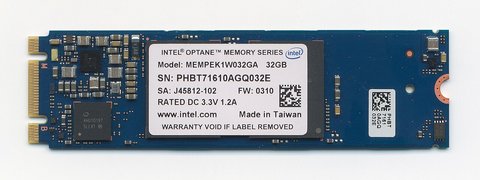
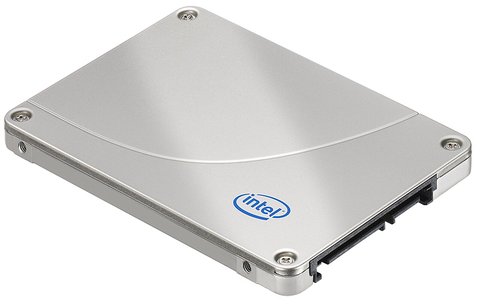
The cover is a 2011 Intel Free Press product photograph, not an image captured on launch day. It shows the plain metal object that helped redefine computer speed: the X25-M was expensive and small, but it demonstrated that a well-designed flash controller could make latency—not just capacity—the center of storage performance.
Photo: Intel Free Press, CC BY 2.0, via Wikimedia Commons































changes?
delete this memory?
We detected that you have a Blox in your crypto wallet! We will import the Blox into your account.
Click on done below to complete the import.
Welcome Back!
Sign in to preserve cherished moments
Don't have an account?
Welcome!!
Sign up and start preserving cherished moments
?
?







Choose your payment method
Buy with Metablox Credit
Do you want to mint Blox with Metablox Credit?
Which Crypto would you like to use?
Purchase Confirmed!
Your Blox is being minted on-chain and will appear in your profile shortly.
Log in or sign up to claim your Blox.
How many credits do you want to buy?
$100 USD = 1 Metablox Credit = 1 Blox.
Use Metablox Credit to mint any Blox you want on the map.
 expand_more